

What's Happening?
NASA has successfully fueled the Nancy Grace Roman Space Telescope, marking a significant step towards its scheduled launch in late August. The fueling process involved loading 290 gallons of hydrazine fuel into the observatory at NASA's Kennedy Space Center.
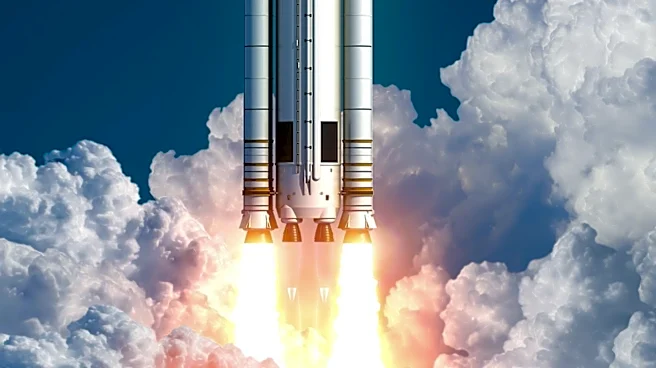
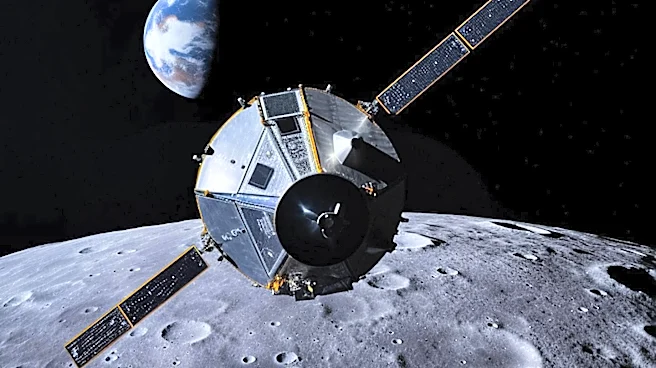
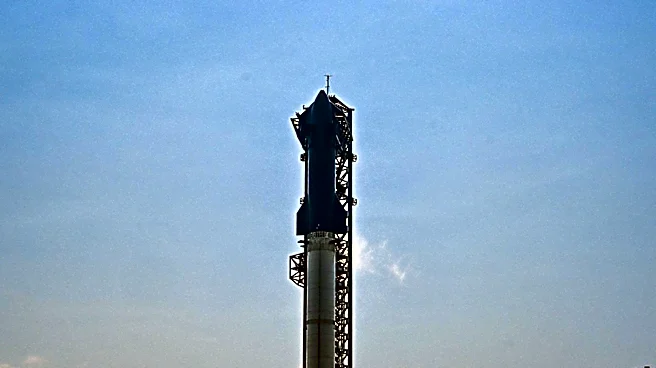
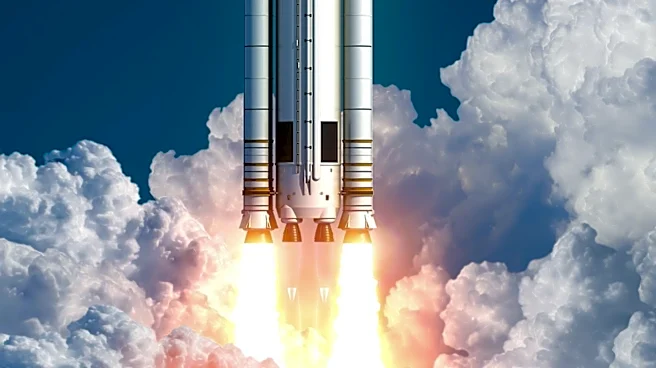
This fuel will power the telescope's thrusters, enabling it to maintain its orbit around the Sun-Earth Lagrange point 2, located about one million miles from Earth. The Roman Space Telescope is designed to study thousands of exoplanets and the mystery of dark energy, with a primary mission duration of five years and potential for an additional five years. The launch is set for August 30 aboard a SpaceX Falcon Heavy rocket.
Why It's Important?
The Roman Space Telescope represents a major advancement in space exploration and astronomical research. By studying exoplanets and dark energy, the telescope could provide critical insights into the universe's expansion and the potential for life beyond Earth. Its successful deployment and operation could significantly enhance our understanding of cosmic phenomena and contribute to the broader field of astrophysics. The mission also underscores the collaboration between NASA and private industry, exemplified by the partnership with SpaceX for the launch.
What's Next?
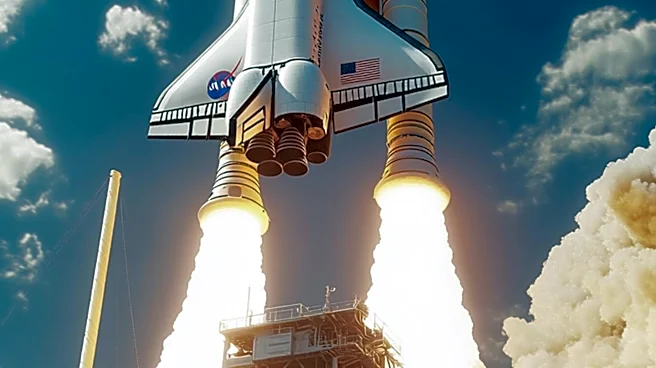
Following the successful fueling, the next steps include attaching the telescope to the rocket's top stage and encapsulating it within the payload fairing. This preparation will ensure the spacecraft's protection during launch. The mission team will continue to monitor and prepare for the scheduled launch on August 30. Once in orbit, the Roman Space Telescope will begin its scientific observations, potentially leading to groundbreaking discoveries in the field of astronomy.