



What's Happening?
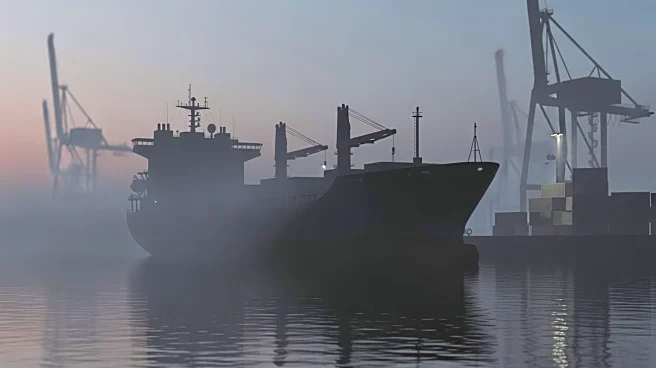
The U.S. military is exploring the use of 'shadow fleet' tactics to address logistical challenges in the Indo-Pacific region. These tactics, inspired by illicit networks, involve using covert operations to ensure the movement and resupply of forces in contested
environments. The concept is to employ deceptive practices similar to those used by countries like China and Russia, which operate ghost fleets that avoid detection by disabling or falsifying signals. This approach could allow the U.S. to preposition critical equipment and supplies discreetly, enhancing operational readiness without provoking adversaries.
Why It's Important?
The adoption of shadow fleet tactics could significantly enhance the resilience of U.S. military logistics in the Indo-Pacific, a region marked by geopolitical tensions. By reducing reliance on traditional supply chains, which are vulnerable to disruption, the U.S. can maintain its operational tempo and effectiveness. This strategy could also mitigate risks associated with large-scale logistical hubs, making the supply network more robust against potential adversary attacks. The integration of such tactics would require strategic investments in autonomous systems and secure communication protocols, potentially reshaping military logistics doctrine.
What's Next?
The U.S. military may need to invest in developing more sophisticated autonomous systems and secure communication protocols to support shadow fleet operations. Policy changes and adjustments in military doctrine and budget allocations could be necessary to fully implement these strategies. Training programs and personnel requirements would also need to be adapted to manage this advanced logistical system effectively. The success of integrating shadow fleet tactics could have long-term implications for U.S. military operations, particularly in contested environments.