







What's Happening?
Health insurance premiums are anticipated to see substantial increases in 2027, with deductibles and family premiums continuing to outpace inflation. Over the past decade, the cost of deductibles and family premiums has risen by 54% and 53% respectively,
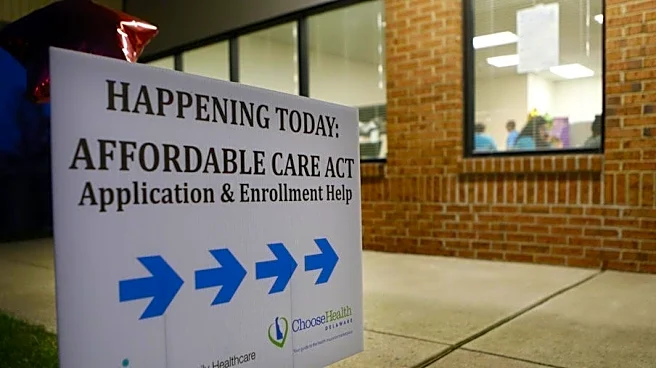
compared to an overall inflation rate of 36%. This trend is expected to persist, impacting both employer-sponsored plans and the Affordable Care Act (ACA) marketplace. Currently, 19.2 million Americans are enrolled in ACA marketplace plans, which typically serve self-employed individuals, gig workers, early retirees, and small business owners. Insurers are raising premiums for 2027 due to expectations that younger, healthier individuals may drop their plans, leading to a higher proportion of older, sicker, and more costly-to-insure individuals remaining in the pool. Factors contributing to these rising costs include increased utilization of GLP-1 drugs for weight management, the expiration of enhanced Obamacare subsidies, and persistent high inflation across the healthcare system. Consulting firms like Aon and Marsh project employer healthcare costs to jump by 9.5% and 8.2% respectively in 2027, marking a sustained period of elevated healthcare inflation.
Why It's Important?
The projected significant increase in health insurance premiums and associated costs in 2027 carries substantial implications for U.S. households, employers, and the broader economy. For workers, this means a likely increase in their total healthcare costs, including premiums and out-of-pocket expenses, as employers are expected to pass on some or all of their additional costs. This financial strain comes at a time when household budgets are already stretched by broader affordability issues. For individuals enrolled in the ACA marketplace, particularly those with incomes above 400% of the federal poverty line who are ineligible for premium subsidies, the full impact of these higher premiums will be felt directly. The rising cost of healthcare is also becoming a significant political issue, with surveys indicating that a substantial portion of voters consider healthcare costs a major factor in their electoral decisions. This could influence upcoming midterm and presidential elections, as affordability in healthcare remains a top concern for the public. The trend also highlights the ongoing challenges in managing healthcare spending in the U.S., with potential long-term effects on access to care and financial stability for many Americans.
What's Next?
As health insurance premiums are set to rise in 2027, individuals and employers will need to carefully evaluate their healthcare options. Employers are already planning cost-cutting measures, with nearly 60% intending to make changes such as adding higher deductibles. While these measures might temper premium increases, they will shift more financial responsibility onto workers who utilize their insurance. For ACA marketplace enrollees, understanding the nuances of their plans, including deductibles, copayments, and prescription coverage, will be crucial. The expiration of enhanced premium tax credits will particularly affect those with higher incomes, who will face the full, unsubsidized premium costs. Consumers will need to actively compare plans, considering factors beyond just the monthly premium, such as in-network providers, medication formularies, and out-of-pocket maximums. The Centers for Medicare & Medicaid Services (CMS) has also released its calendar year 2027 proposed rule for the physician fee schedule, indicating ongoing regulatory adjustments within the healthcare landscape. The political discourse around healthcare affordability is expected to intensify, potentially leading to further policy debates and proposals aimed at mitigating rising costs.
Beyond the Headlines
The anticipated surge in health insurance costs in 2027 points to deeper systemic issues within the U.S. healthcare system, extending beyond mere inflationary pressures. The expectation that younger, healthier individuals will opt out of insurance, leaving a sicker, more expensive pool, underscores a fundamental challenge in risk pooling and the sustainability of insurance markets. This phenomenon, often referred to as adverse selection, can lead to a spiraling effect where premiums continue to rise, further deterring healthy individuals and exacerbating the problem. The increasing reliance on high-cost specialty drugs, such as GLP-1 medications, also highlights the tension between medical innovation and affordability. While these drugs offer significant health benefits, their cost structure contributes to overall healthcare expenditure. Furthermore, the consolidation within health services, where large hospital systems acquire smaller practices, grants these larger entities greater negotiating power, potentially driving up prices for services. This complex interplay of market dynamics, policy decisions, and medical advancements suggests that addressing healthcare affordability will require multifaceted solutions, potentially involving regulatory reforms, innovative payment models, and a re-evaluation of how healthcare costs are distributed across society.