

What's Happening?
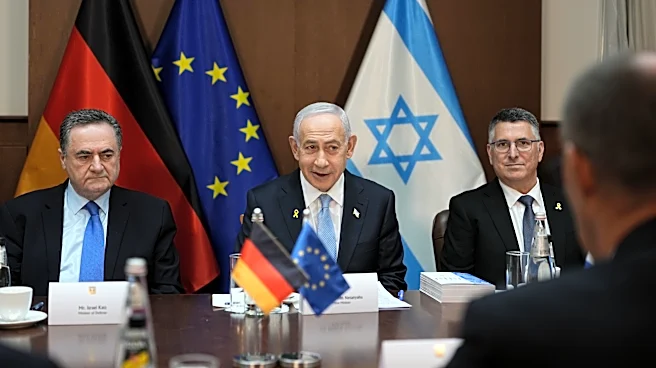
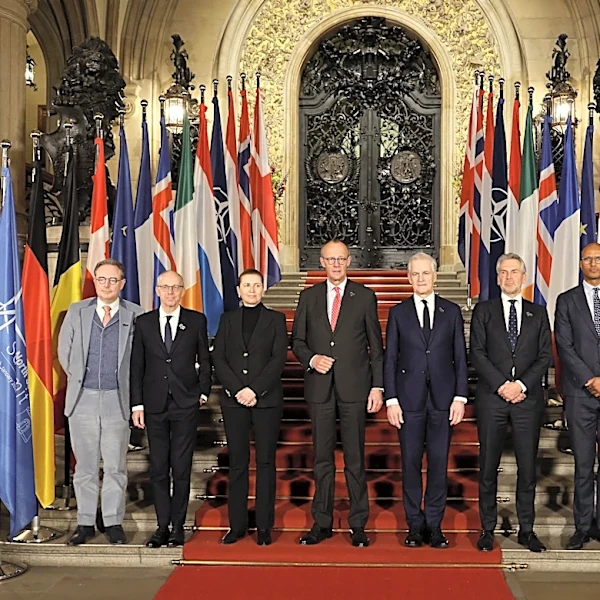
The foreign ministers of the United Kingdom, Australia, Canada, and Italy have issued a joint statement urging Israel to allow immediate, rapid, and unimpeded humanitarian access throughout Gaza. They described the humanitarian situation as "dire," with
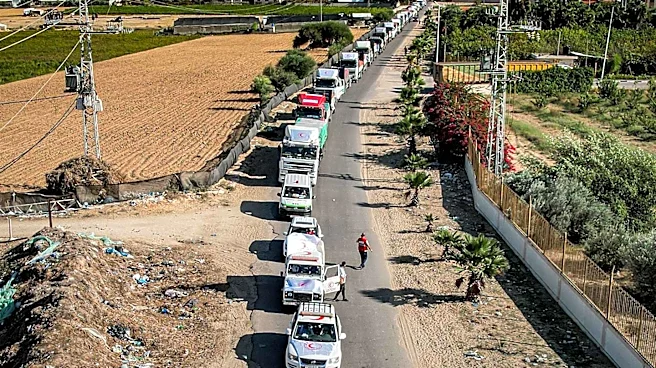
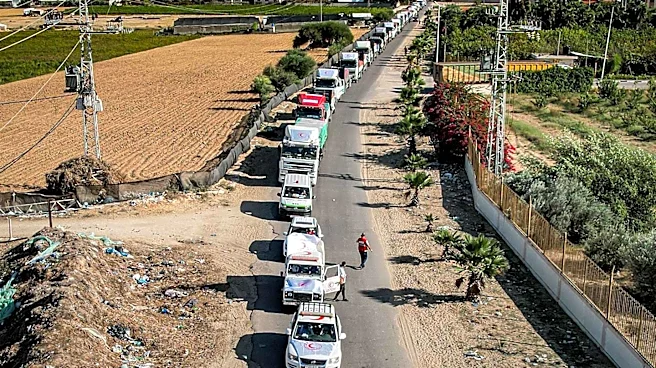
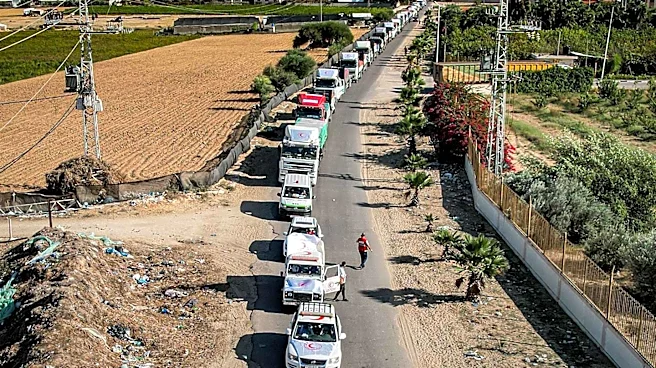
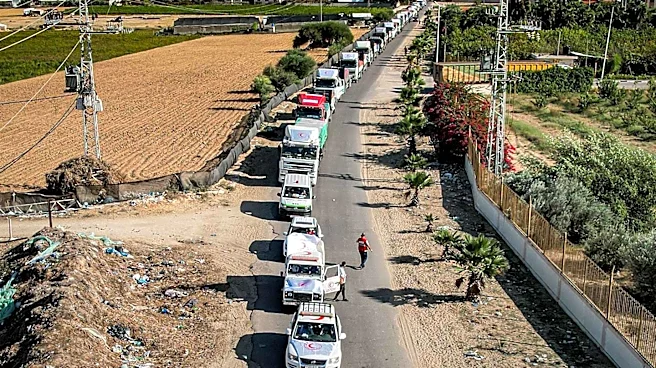
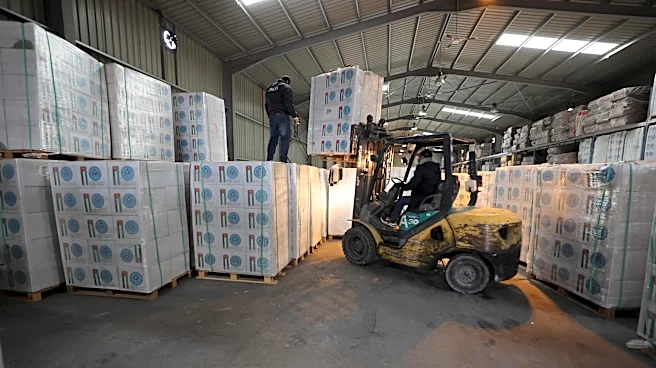
people in desperate need of shelter and assistance as winter approaches. The statement highlighted that 150,000 tents and other vital supplies are being held at the border, prevented from entering Gaza. This comes after heavy rains and flooding on November 7, which affected approximately 70,000 tents housing displaced Palestinians and overwhelmed rescue services. The United Nations Office for the Coordination of Humanitarian Affairs (OCHA) reported that about 1.4 million Palestinians, or 65% of Gaza's population, are living in tents or makeshift shelters, with humanitarian shelter stocks nearly exhausted.
Why It's Important?
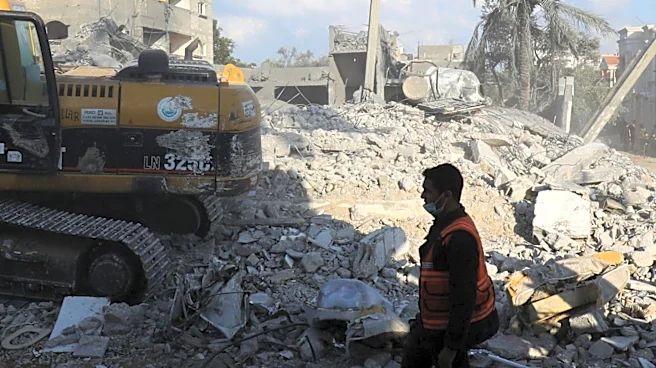
This joint call from four allied nations underscores the severe humanitarian crisis unfolding in Gaza and the international community's growing concern. The blockade of essential supplies, including tents and other winter provisions, exacerbates the suffering of a population already displaced and vulnerable due to ongoing conflict. The inability to deliver aid not only leads to immediate hardship, such as the reported death of a nine-month-old baby from hypothermia, but also poses long-term health and stability risks. The situation challenges international humanitarian law, which mandates the protection of civilians and access to aid in conflict zones. Israel's stated concerns about Hamas using certain materials for military purposes are being weighed against the urgent need to prevent a deeper humanitarian catastrophe, placing significant diplomatic pressure on all parties involved.
What's Next?
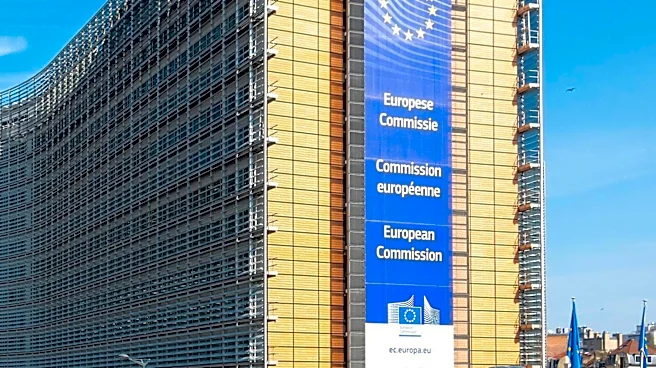
The foreign ministers emphasized that the situation is "entirely reversible" and that there is still time to act before winter fully sets in. The call for immediate action suggests that diplomatic efforts will continue to focus on pressuring Israel to open border crossings and allow in dual-use items necessary for humanitarian operations and early recovery. The European Union has also issued a similar statement, reiterating its "grave concern" and urging Israel to comply with international law. The effectiveness of these calls will depend on Israel's response and the willingness of international actors to implement further measures if aid access remains restricted. The ongoing military activities and the stated Israeli policy that reconstruction can only begin after Hamas fully disarms indicate a complex and challenging path forward for humanitarian relief.
Beyond the Headlines
The humanitarian crisis in Gaza, exacerbated by the denial of essential aid, highlights the broader ethical and legal dilemmas inherent in prolonged conflicts. The suffering of civilians, particularly children, due to lack of shelter and medical supplies, raises fundamental questions about the responsibilities of warring parties and the international community. The situation could lead to a re-evaluation of aid policies and the mechanisms for ensuring humanitarian access in conflict zones. It also underscores the interconnectedness of political, military, and humanitarian issues, where military objectives can have devastating civilian consequences. The long-term impact on the population's health, well-being, and trust in international institutions could be profound, potentially fueling further instability and resentment in the region.