




What's Happening?
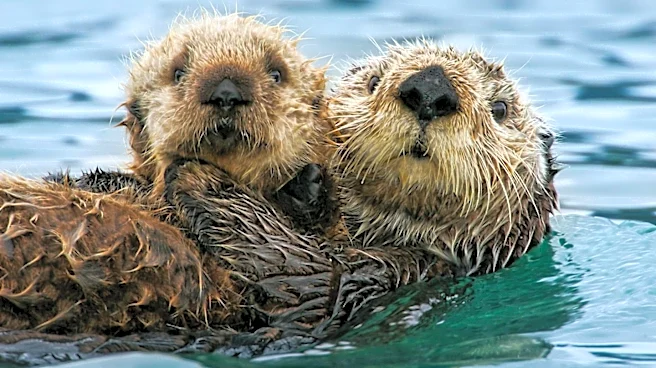
Researchers at Point Reyes Lagoon in California have documented a surprising predatory behavior by river otters, which have killed 73 brown pelicans over 19 visits. This unusual interaction between two recovering species was observed by Terence Carroll
and Megan Isadore of the River Otter Ecology Project. The study, published in the IUCN Otter Specialist Group Bulletin, highlights how otters, typically fish and small bird predators, have adapted to hunting larger prey like pelicans. The otters' predation is believed to be driven by their high energy needs, as swimming in cold water requires significant caloric intake. The study also notes that pelicans are beginning to adapt by flying away when otters approach.
Why It's Important?
This behavior has significant ecological implications, as it introduces a new dynamic in the local food chain. The otters' predation on pelicans not only affects the bird population but also provides a food source for land-based scavengers like coyotes, which feed on the remains. This interaction demonstrates how changes in predator-prey relationships can ripple through an ecosystem, affecting various species and their interactions. The study also underscores the importance of monitoring wildlife interactions as both otters and pelicans continue to recover in Northern California.
What's Next?
Continued observation and research are necessary to understand the long-term impacts of this predation on both the pelican population and the broader ecosystem. Wildlife managers may need to consider strategies to mitigate potential negative effects on the pelican population, especially if the predation rate increases. Additionally, the study could prompt further research into how other recovering species are adapting to changing environmental conditions and interactions with other wildlife.
Beyond the Headlines
The study highlights the complex and often unexpected ways in which wildlife species interact and adapt to their environments. It raises questions about the balance between conservation efforts and natural predation, as well as the role of human intervention in managing these dynamics. The findings also contribute to a broader understanding of how climate change and habitat restoration efforts can influence wildlife behavior and ecosystem health.