






What's Happening?
The Valparaiso Board of Works and Safety unanimously approved an amendment to the police department’s automatic license plate reader (ALPR) policy. The updated policy, expanded from three-and-a-half to five-and-a-half pages and from two to six categories,
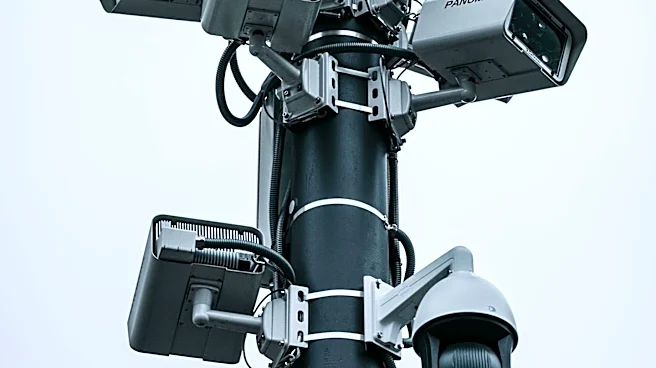
now covers manual and historical searches, authorized users and training, data access and retention, audit and accountability, and misuse. This amendment comes as the use of ALPRs, often referred to as Flock cameras, faces increased scrutiny nationally and locally due to privacy concerns. Valparaiso Police Chief Andrew McIntyre stated the proactive approach aims to ensure the technology is not used for surveillance or monitoring individuals. The department emphasizes that ALPRs are to be used only for legitimate law enforcement reasons, such as identifying wanted individuals or stolen vehicles, and not for arbitrary license plate checks. The policy clarifies that Flock data is retained for 30 days and provides only vehicle description and location, without driver visibility or facial recognition.
Why It's Important?
This policy expansion in Valparaiso is important as it reflects a growing national conversation about the balance between public safety and individual privacy in the age of advanced surveillance technology. The increased scrutiny of ALPRs, particularly after instances of misuse by other police departments in Porter County, Chesterton, and Michigan City, highlights the critical need for clear guidelines and accountability. The Valparaiso police department's proactive measure to strengthen its policy aims to build public trust and prevent potential abuses of power. The emphasis on specific use cases, data retention limits, and the absence of facial recognition capabilities addresses some of the most common privacy concerns. This move could serve as a model for other municipalities grappling with similar issues, demonstrating a commitment to responsible technology deployment while maintaining effective law enforcement capabilities. It underscores the evolving legal and ethical landscape surrounding data collection by law enforcement agencies.
What's Next?
Following the approval of the amended policy, the Valparaiso Police Department will continue to implement its enhanced training and auditing procedures for officers using ALPRs. Chief McIntyre stressed the seriousness of policy violations, which could lead to termination of employment, indicating a strict enforcement approach. The department will likely monitor the effectiveness of the new safeguards and remain responsive to ongoing national discussions and technological advancements related to ALPRs. The city's proactive stance suggests a continuous reevaluation of policies and procedures to maintain high standards of professionalism and address public concerns. Other communities may observe Valparaiso's approach as they develop or refine their own policies regarding surveillance technologies, potentially leading to broader adoption of similar safeguards across the country.
Beyond the Headlines
The Valparaiso policy amendment delves into the deeper societal implications of ubiquitous surveillance technology. Mayor Jon Costas acknowledged the 'new reality' of surveillance tools being present on homes and businesses, highlighting the pervasive nature of data collection in modern life. This situation raises fundamental questions about the definition of privacy in public spaces and the extent to which law enforcement can leverage technology without infringing on civil liberties. The policy's explicit prohibition against using ALPRs for general surveillance and its focus on legitimate law enforcement purposes attempt to draw a clear line. However, the very existence of such powerful tools necessitates ongoing public discourse and robust oversight to prevent mission creep and ensure that technological capabilities do not outpace ethical and legal frameworks. The debate over ALPRs is a microcosm of the larger challenge of integrating advanced technology into society while upholding democratic values and individual rights.