




What's Happening?
China is intensifying its diplomatic engagement in the Gulf region, with its Middle East envoy scheduled to visit Iran, Oman, and Saudi Arabia later this month. This move comes as Chinese leader Xi Jinping hosted Oman's Sultan Haitham bin Tariq in Beijing,
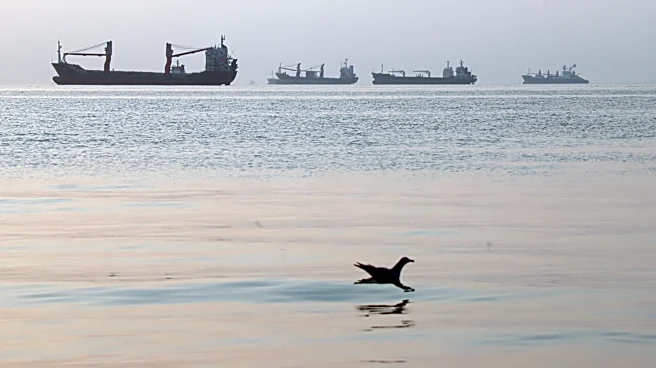
where Xi emphasized that the Gulf should not become an arena for great-power rivalry. Despite China being Oman's largest trade partner, this marks the first visit by an Omani head of state since diplomatic ties were established in 1978. A joint statement from the two leaders called for the resumption of safe navigation through the Strait of Hormuz and for Washington and Tehran to return to their June truce. Concurrently, China's energy regulator has instructed oil and gas majors to expand supply under a 10-year plan, citing ongoing geopolitical instability and the nation's vulnerability to high energy and shipping prices.
Why It's Important?
China's heightened diplomatic activity in the Gulf underscores its strategic interest in maintaining stability in a region critical for global energy supplies and trade routes. As the world's second-largest economy, China is highly susceptible to fluctuations in energy and shipping costs, making regional stability a paramount concern. By advocating for de-escalation and peace talks, Beijing aims to safeguard its economic interests and prevent disruptions that could impact its domestic energy security. The call for Washington and Tehran to return to their truce highlights China's desire to see a reduction in tensions between key players, which could otherwise lead to broader conflicts and economic instability. This diplomatic push also signals China's growing influence in a region traditionally dominated by Western powers, potentially reshaping geopolitical dynamics.
What's Next?
The upcoming visit by China's Middle East envoy to Iran, Oman, and Saudi Arabia will be a critical step in Beijing's efforts to foster dialogue and de-escalation in the Gulf. The outcomes of these discussions could influence regional stability and the broader geopolitical landscape. China's continued emphasis on expanding its domestic oil and gas supply under a 10-year plan suggests a long-term strategy to enhance its energy independence and resilience against global shocks. The international community will be watching to see if China's diplomatic initiatives can effectively mitigate tensions and encourage a return to stability in the Middle East, particularly concerning the Strait of Hormuz and relations between the U.S. and Iran.
Beyond the Headlines
China's proactive diplomatic stance in the Gulf reflects a broader shift in its foreign policy, moving beyond purely economic engagement to a more active role in regional security. This engagement could be seen as an attempt to fill a perceived vacuum or to counter the influence of other major powers. The emphasis on preventing the Gulf from becoming a 'wrestling ground for major-country rivalry' suggests China's desire to promote a multipolar world order where its interests are protected without direct confrontation. This approach could lead to a more complex and diversified set of alliances and diplomatic channels in the Middle East, potentially altering traditional power balances and fostering new forms of regional cooperation.