


What's Happening?
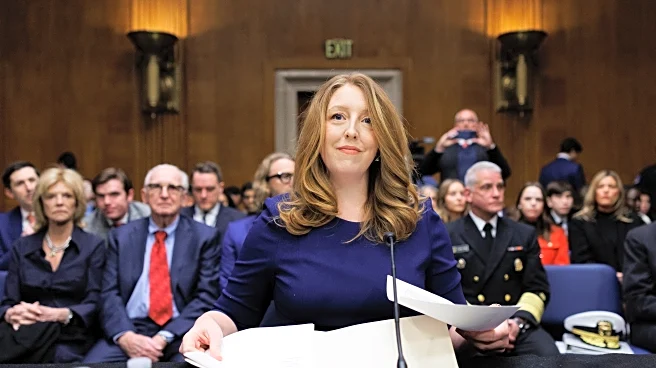
Casey Means, a nominee for the position of U.S. Surgeon General, recently testified before the Senate's health committee, marking a notable shift in her public stance on vaccines. Known for her unconventional views on wellness, Means emphasized her medical
background and sought common ground with senators. During the hearing, she expressed support for vaccines as a crucial part of public health strategy, although she hesitated to fully endorse the flu vaccine's effectiveness in preventing serious illness in children. Means also voiced support for the measles vaccine but refrained from recommending it to parents, possibly to avoid alienating anti-vaccine supporters within the MAHA movement. Her testimony comes at a time when the MAHA movement, led by Robert F. Kennedy Jr., is adjusting its focus from vaccines to broader health issues like food industry practices.
Why It's Important?
Means' testimony is significant as it reflects a potential shift in the MAHA movement's strategy, which could influence public health policy and political dynamics. Her nomination and the movement's evolving stance on vaccines and health issues could impact public trust in health recommendations and the political landscape, especially with upcoming midterm elections. The MAHA movement's pivot towards food industry criticism, while maintaining a nuanced position on vaccines, suggests a strategic attempt to broaden its appeal and address more widely supported health concerns. This shift could affect public discourse on health and wellness, potentially influencing policy decisions and public perceptions of health authorities.
What's Next?
If confirmed as Surgeon General, Means will play a pivotal role in shaping public health policy amidst a movement experiencing an identity crisis. The MAHA movement's focus on food industry practices and its nuanced vaccine stance may lead to new public health initiatives and debates. Political leaders and health organizations will likely monitor Means' actions closely, as her leadership could redefine the movement's influence on health policy. The outcome of her confirmation and the movement's strategic direction could have lasting implications for public health strategies and political alignments in the U.S.