








What's Happening?
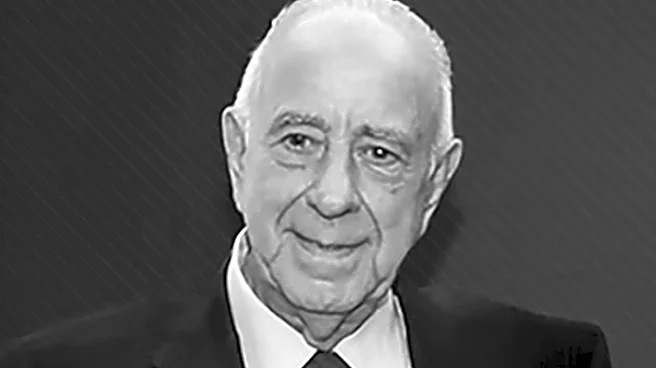
Abraham Foxman, the former national director of the Anti-Defamation League (ADL), has passed away at the age of 86. Foxman, a Holocaust survivor, led the ADL from 1987 until 2015, after which he served in an emeritus role. His funeral is scheduled to take
place at Park Avenue Synagogue in New York City and will be live-streamed. Foxman was known for his strong stance against antisemitism and his efforts to promote tolerance and education. He was a prolific writer, contributing opinion pieces and authoring books on Jewish issues. Foxman was also a key advisor to American presidents and world leaders, advocating for the Jewish community and the state of Israel. His passing has been met with condolences from various leaders, including Israeli President Isaac Herzog, who praised Foxman's lifelong mission to combat antisemitism and racism.
Why It's Important?
Foxman's death marks the loss of a significant figure in the fight against antisemitism and bigotry. His leadership at the ADL helped shape the organization's focus on education and advocacy, making it a prominent voice in promoting tolerance and combating hate. Foxman's work has had a lasting impact on U.S. society, influencing public policy and raising awareness about antisemitism and other forms of discrimination. His efforts have contributed to a broader understanding of the importance of combating hate speech and promoting inclusivity. As a Holocaust survivor, Foxman's personal story added a powerful dimension to his advocacy, inspiring many to continue the fight against prejudice and intolerance.
What's Next?
The ADL and other organizations are likely to continue Foxman's legacy by maintaining a strong focus on education and advocacy against antisemitism and hate. The live-streamed funeral service may serve as a platform for leaders and community members to reflect on Foxman's contributions and discuss future strategies for combating discrimination. The ADL, under the leadership of Jonathan Greenblatt, is expected to uphold Foxman's principles and continue to hold world leaders accountable for addressing antisemitism and promoting tolerance. The Jewish community and allies may also use this moment to reinforce their commitment to fighting hate and ensuring that Foxman's vision for a more inclusive society is realized.
Beyond the Headlines
Foxman's life and work highlight the enduring impact of the Holocaust on survivors and their families. His story of survival and subsequent advocacy underscores the importance of remembering history to prevent future atrocities. Foxman's approach to combating antisemitism through education and dialogue serves as a model for addressing other forms of discrimination. His legacy challenges individuals and institutions to confront hate and work towards a more just and equitable society. The ethical and cultural dimensions of Foxman's work continue to resonate, reminding society of the need for vigilance against bigotry and the power of words in shaping public discourse.