






What's Happening?
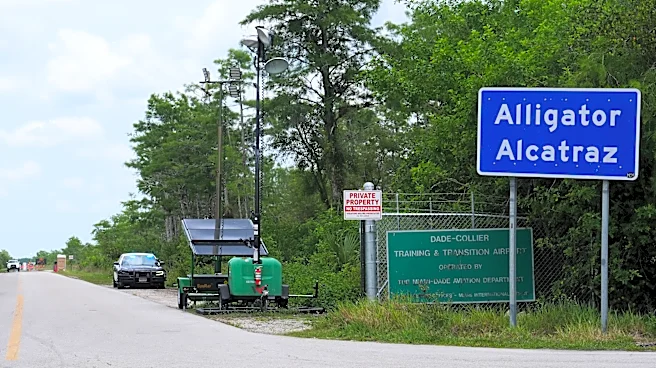
The Federal Emergency Management Agency (FEMA) has approved a $58 million payment to Florida as part of a larger $608 million reimbursement package for the controversial 'Alligator Alcatraz' detention center. This payment is expected to be processed within
the next 3 to 5 business days. The funds are intended to cover operational costs such as staff salaries, detainee meals, and medical supplies, but not for construction or modifications of the facility. The payment comes after environmental holds delayed the funding, and just weeks before the center is scheduled to shut down. The facility, located in the Everglades, has faced criticism for its high costs and alleged legal and environmental issues. Governor Ron DeSantis has expressed confidence that Florida will eventually receive the full reimbursement, despite the slow federal process.
Why It's Important?
The reimbursement is significant as it addresses the financial burden Florida has faced in operating the 'Alligator Alcatraz' facility, which reportedly costs over $1 million per day. The payment alleviates some of the financial strain on the state, which has already spent nearly $460 million on immigration enforcement, with a substantial portion allocated to this facility. The controversy surrounding the center highlights ongoing debates about immigration policy and the financial responsibilities of state versus federal governments. The payment also underscores the challenges states face in receiving timely federal reimbursements for large-scale projects.
What's Next?
As the first installment of the reimbursement is processed, Florida will continue to seek the remaining funds from FEMA. The closure of 'Alligator Alcatraz' is imminent, which may shift the focus to how the state will manage detainees and immigration enforcement moving forward. The situation may prompt further discussions on the efficiency and transparency of federal reimbursement processes, as well as the future of similar detention facilities. Stakeholders, including state officials and immigration advocates, will likely monitor the situation closely to assess the impact of the facility's closure and the financial implications for Florida.