






What's Happening?
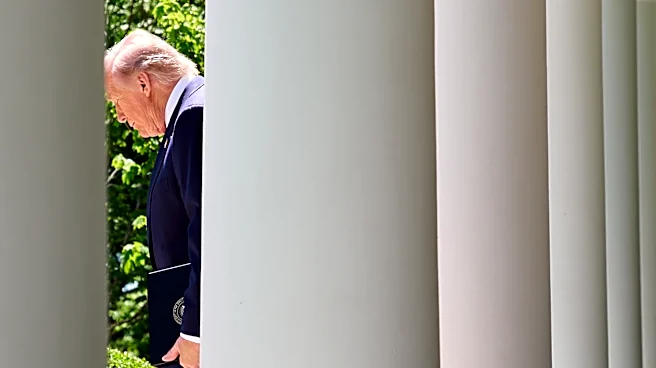
President Trump has reiterated his intention to inspect the gold reserves at Fort Knox, valued at nearly $700 billion, to ensure their security. This follows previous concerns raised by former Department of Government Efficiency head Elon Musk about the potential
theft of the nation's gold. The gold reserves at Fort Knox account for half of the government's supply, and access to the facility has been heavily restricted for decades. Despite the U.S. Mint's assessment of the gold's book value at $6.2 billion, the market value is significantly higher, around $4,700 per ounce. The importance of Fort Knox to U.S. monetary policy has diminished since the country abandoned the gold standard in 1971.
Why It's Important?
The security of the nation's gold reserves is a matter of national interest, impacting public confidence in the government's financial stewardship. President Trump's focus on verifying the gold at Fort Knox highlights the ongoing debate over government transparency and accountability. The potential implications of any discrepancies in the gold reserves could affect the U.S. economy and its financial credibility. Additionally, the involvement of high-profile figures like Elon Musk in raising these concerns underscores the influence of public figures in shaping policy discussions. The situation also reflects broader questions about the role of gold in modern monetary policy.
What's Next?
It is uncertain when President Trump will conduct his inspection of Fort Knox. The administration may face increased pressure to provide transparency regarding the security and auditing of the nation's gold reserves. The outcome of this situation could influence future policies on government transparency and the management of national assets. Additionally, the continued promotion of conspiracy theories by influential figures could lead to further public scrutiny and calls for action.