




What's Happening?
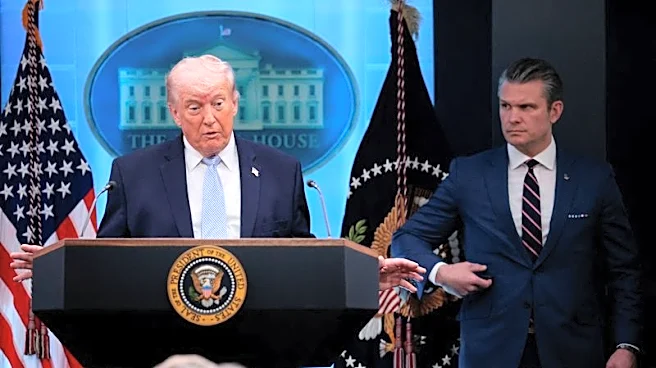
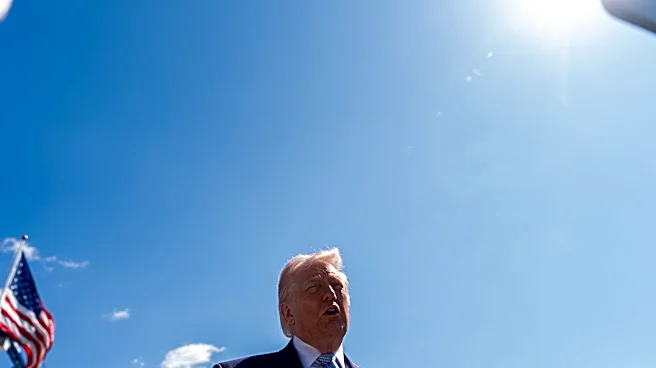
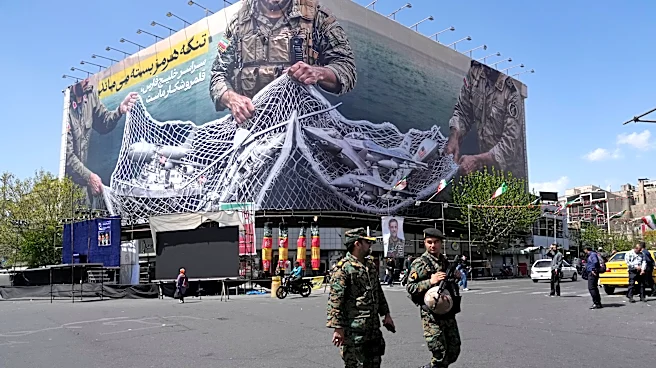
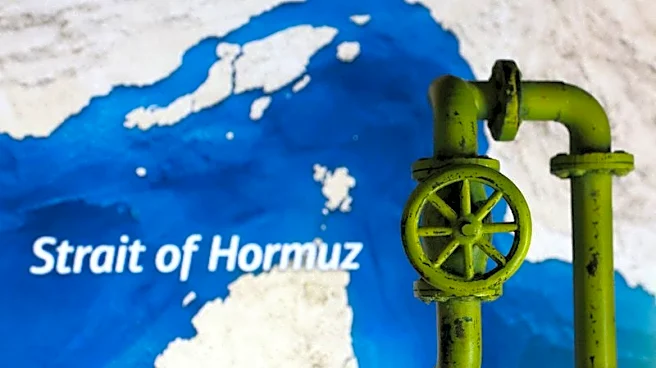
President Trump has issued a stark warning to Iran, demanding the reopening of the Strait of Hormuz by the end of Tuesday. The ultimatum comes amid intensified strikes on Iran, with the U.S. president stating that 'a whole civilization will die tonight'
unless Tehran reaches a last-minute deal. The geopolitical tension has impacted gold prices, which have drifted higher as traders await the outcome of the deadline. Spot gold was up 0.8% at $4,684.59 per ounce, while U.S. gold futures remained unchanged. Analysts suggest that gold traders are more focused on potential central bank interest rate decisions than geopolitical events, as major economies holding off on lowering rates could mean less demand for gold.
Why It's Important?
The situation underscores the volatile nature of geopolitical conflicts and their impact on global markets. The Strait of Hormuz is a critical chokepoint for global oil shipments, and its closure could have significant implications for energy prices and inflation. Higher energy costs could limit central banks' ability to cut interest rates, affecting economic growth. Gold, traditionally a hedge against inflation, becomes less attractive in a high-rate environment due to its lack of yield. The ongoing conflict and President Trump's ultimatum could lead to further market instability, influencing investor sentiment and economic policy decisions.
What's Next?
The market is closely watching the Federal Reserve's upcoming meeting minutes, U.S. Personal Consumption Expenditures data, and the Consumer Price Index, which could provide insights into future economic conditions. Additionally, China's continued gold purchases for the 17th consecutive month indicate a strategic move to bolster reserves amid global uncertainty. The outcome of President Trump's ultimatum and Iran's response will be pivotal in shaping geopolitical dynamics and market reactions.