




What's Happening?
U.S. President Donald Trump’s special envoys, Jared Kushner and Steve Witkoff, are scheduled to meet with representatives from Ukraine, the European Union, NATO, Germany, France, the United Kingdom, and Italy. This preparatory meeting will take place
ahead of trilateral talks involving Ukraine, Russia, and the United States in Abu Dhabi, as announced by Kushner on X on November 9. These discussions aim to continue consultations on European security and Ukraine’s postwar future, which have been ongoing for several weeks. The Abu Dhabi talks will mark the first trilateral negotiations since February, with the U.S. seeking to facilitate direct discussions between Ukraine and Russia on their security concerns, proposals, and potential postwar solutions. Kushner expressed hope that these talks will identify common ground and build momentum for future negotiations. The U.S. priorities for these discussions include ending the fighting, establishing reliable postwar security guarantees, developing a comprehensive economic plan for Ukraine, and implementing humanitarian measures such as the return of prisoners and civilians. Washington is also collaborating with the EU and European partners to address Ukraine’s reconstruction needs and attract private investment.
Why It's Important?
These diplomatic efforts are significant as they represent a renewed push by the U.S. to mediate an end to the conflict between Russia and Ukraine. The inclusion of key European allies in preliminary discussions underscores a broader strategy to ensure a comprehensive and lasting settlement that addresses wider European security arrangements. Russia has previously resisted European participation, preferring a strictly trilateral format. However, the U.S. administration believes that European involvement is crucial for a successful resolution. The talks aim to establish security guarantees that can satisfy both Russia, which views NATO as a threat, and Ukraine, which seeks to prevent future invasions. The outcome of these negotiations could have profound implications for regional stability, international relations, and the future security architecture of Europe. Furthermore, the focus on Ukraine's postwar economic recovery and humanitarian issues highlights the multifaceted approach required to address the conflict's extensive consequences.
What's Next?
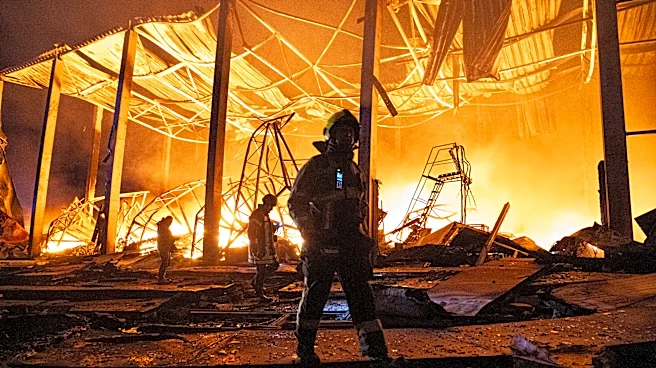
The trilateral talks between Ukrainian, Russian, and U.S. delegations are scheduled for November 10 and 11 in Abu Dhabi. Following these discussions, if progress is made, U.S. officials Steve Witkoff and Jared Kushner may travel to Moscow and Kyiv to meet directly with Russian President Vladimir Putin and Ukrainian President Volodymyr Zelenskyy. The U.S. aims to persuade Russia to agree to broader negotiations that would include key European officials. Ukrainian Foreign Intelligence Service chief Rustem Umerov is leading Ukraine's delegation, while Russian dictator Vladimir Putin’s aide Vladimir Medinsky will head the Russian delegation, which includes higher-level representatives than in previous rounds, potentially signaling a greater willingness for substantive engagement. European representatives will also be present in Abu Dhabi for separate coordination meetings with the Ukrainian delegation. The ongoing military actions, including Russian strikes on Ukraine's power grid and Ukrainian attacks on Russian oil refineries, continue to underscore the urgency of these diplomatic efforts.
Beyond the Headlines
The renewed diplomatic push, particularly the U.S. insistence on European inclusion, signals a potential shift in the approach to resolving the conflict. This move could challenge Russia's long-standing preference to negotiate Ukraine's future directly with the U.S., bypassing European powers. The emphasis on 'collective security' as a top agenda item, as noted by Russian Foreign Minister Sergey Lavrov, suggests a broader scope for these discussions beyond just Ukraine. This could lead to a re-evaluation of existing security frameworks in Europe and potentially reshape geopolitical alliances. The involvement of President Trump's envoys also highlights the administration's continued engagement in international mediation, even as domestic political dynamics, such as the upcoming change in U.S. Congress, could influence future policy. The success or failure of these talks will not only impact the immediate conflict but also set precedents for future international conflict resolution and the role of multilateral diplomacy.