





What's Happening?
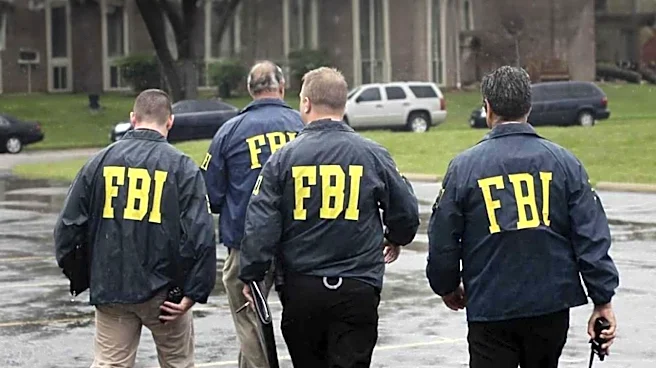
The popular narrative that gangster 'Machine Gun' Kelly coined the term 'G-Men' during his 1933 arrest by begging federal agents not to shoot is a myth, according to a recent analysis. This legend, widely circulated, suggests Kelly's plea led to the immediate
adoption of the term 'Government Men' or 'G-Men' for FBI agents. However, historical accounts indicate that this story was largely fabricated and promoted by J. Edgar Hoover's Bureau and a cooperative press months after the actual event. The real story reveals a deliberate effort by the FBI to craft a public image and enhance its reputation through narrative control and media complicity, transforming a routine capture into a significant branding moment. This institutional myth-making shaped public memory long before modern communication channels existed.
Why It's Important?
This revelation is important as it highlights the historical capacity of government agencies to influence public perception and create enduring myths. The 'G-Men' legend contributed to the FBI's mystique and authority during a critical period in its development, solidifying its image as a formidable law enforcement body. Understanding how such narratives are constructed and disseminated provides insight into the dynamics of power, media, and public memory. It underscores the importance of critically examining official histories and media portrayals, as they can be strategically crafted to serve institutional interests rather than purely factual reporting. This case study serves as a reminder of how authority can leverage narrative control to shape public opinion and historical understanding.
Beyond the Headlines
The case of the 'G-Men' legend extends beyond a simple historical inaccuracy; it delves into the ethical implications of institutional myth-making. The FBI's deliberate creation and propagation of this story raise questions about the responsibility of government entities to present unvarnished truth to the public. It also illustrates the power of media complicity in shaping public narratives, as a 'cooperative press' played a crucial role in disseminating the fabricated account. This historical example offers a lens through which to view contemporary issues of misinformation and propaganda, demonstrating that the manipulation of public perception is not a new phenomenon but a long-standing tactic employed by powerful institutions. The long-term shift triggered by such myth-making can be a public that is less trusting of official narratives, prompting a greater demand for transparency and accountability.