

What's Happening?
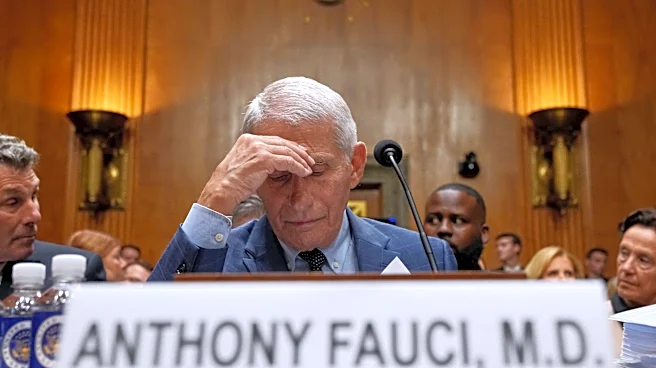
Anthony Fauci, the former director of the National Institute of Allergy and Infectious Diseases, has been declared in contempt of Congress for refusing to testify about his management during the COVID-19 pandemic. The decision was driven by Senator Rand
Paul, who has been a long-time critic of Fauci. Fauci invoked the Fifth Amendment multiple times during a Senate hearing, leading to the contempt declaration. This development opens the possibility for the Department of Justice to consider charges against him.
Why It's Important?
The contempt declaration against Fauci underscores ongoing political tensions surrounding the handling of the COVID-19 pandemic. It highlights the scrutiny faced by public health officials and the politicization of pandemic responses. The potential legal consequences for Fauci could set a precedent for how public health decisions are evaluated and challenged in the political arena. This situation also reflects broader debates about accountability and transparency in government responses to health crises.
What's Next?
The Department of Justice may evaluate whether to pursue charges against Fauci. Additionally, states like Florida and Louisiana have announced investigations into Fauci's actions during the pandemic, focusing on potential financial gains and the impact of his policies. These investigations could lead to further legal challenges and public debates about the role of public health officials in managing national crises.