




What's Happening?
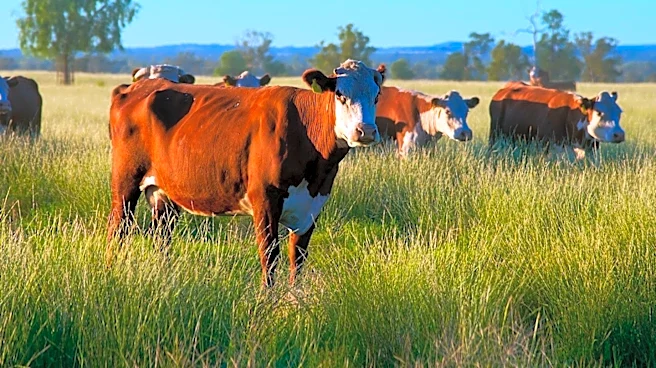
The U.S. cattle herd has reached historic lows, prompting concerns from South Texas lawmakers and agricultural leaders regarding cattle supplies and the affordability of beef. Representative Monica De La Cruz highlighted efforts by Agriculture Secretary
Brooke Rollins to invest in domestic cattle production. De La Cruz emphasized that any initiatives to reduce food costs should not negatively impact U.S. cattle producers. Texas Farm Bureau President Russell Boening echoed these sentiments, stressing the importance of food affordability while cautioning against market volatility and urging the administration to consult with cattle ranchers and the broader industry. Representative Vicente Gonzalez also commented on the challenges faced by South Texas producers, citing issues such as the resurgence of the New World Screwworm, droughts, tariffs, and increased operational costs due to a conflict in Iran. The latest Cattle on Feed report indicates a 9% decrease in placements compared to the previous year, marking the lowest August placements since records began in 1996.
Why It's Important?
The historic decline in the U.S. cattle herd carries significant implications for the nation's food supply chain and economy. Reduced cattle numbers can lead to higher beef prices for consumers, impacting household budgets and potentially contributing to inflation. For the agricultural sector, particularly in states like Texas, which is a major cattle producer, these low numbers threaten the livelihoods of ranchers and associated industries. The concerns raised by lawmakers and agricultural leaders underscore the delicate balance between ensuring affordable food for the public and supporting domestic producers. If the U.S. becomes more reliant on imported beef due to insufficient domestic supply, it could expose the country to global market fluctuations and geopolitical risks. Furthermore, the various factors cited, such as environmental challenges like droughts and international conflicts affecting operational costs, highlight the complex interplay of global and local issues on a fundamental U.S. industry.
What's Next?
The ongoing concerns about the U.S. cattle herd will likely prompt continued discussions and potential policy actions from lawmakers and agricultural agencies. Representative De La Cruz's focus on supporting domestic cattle production suggests that legislative efforts may be directed towards incentives or protections for ranchers. The administration may face increased pressure to engage with industry stakeholders, as advocated by Texas Farm Bureau President Russell Boening, to develop strategies that address both supply shortages and affordability without undermining producers. Monitoring the Cattle on Feed reports and other agricultural data will be crucial for understanding trends and the effectiveness of any interventions. Additionally, the impact of environmental factors and global events on the cattle industry will continue to be a key area of focus, potentially leading to calls for more resilient agricultural policies and risk management strategies.
Beyond the Headlines
The issue of the U.S. cattle herd's historic lows extends beyond immediate economic and agricultural concerns, touching upon broader themes of national food security and the sustainability of domestic food production. A shrinking cattle herd could signal deeper systemic issues within the agricultural sector, including the long-term viability of traditional ranching in the face of climate change, evolving consumer demands, and global market pressures. The debate over balancing food affordability with producer support also highlights a fundamental tension in agricultural policy, where short-term consumer benefits can sometimes conflict with the long-term health of domestic industries. This situation could also accelerate discussions around alternative protein sources or more sustainable farming practices, as the nation grapples with how to feed its population reliably and affordably in an increasingly complex world. The political rhetoric surrounding the issue, as seen in Representative Gonzalez's comments, also indicates how agricultural challenges can become points of partisan debate, influencing broader electoral landscapes.