


What's Happening?
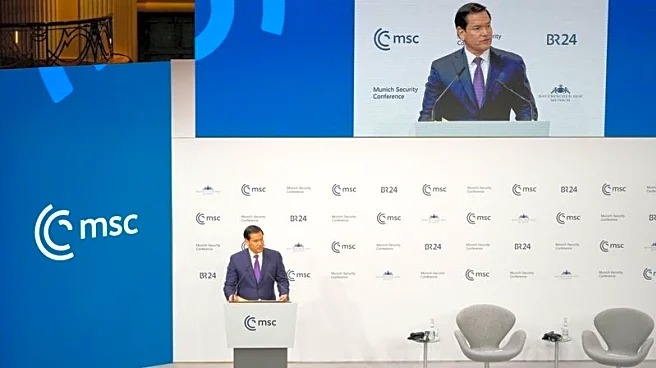
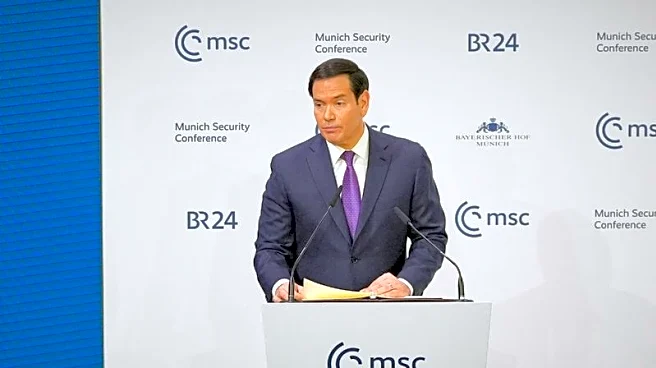
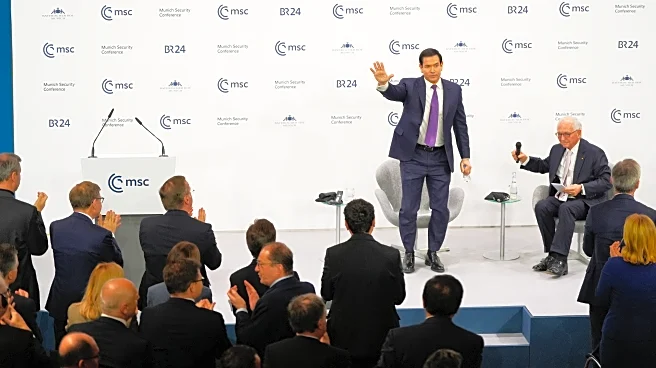
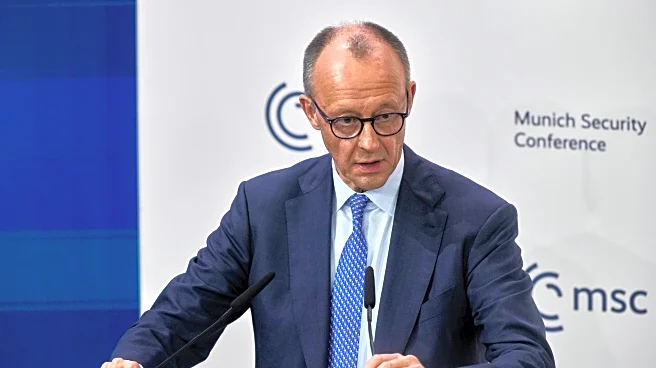
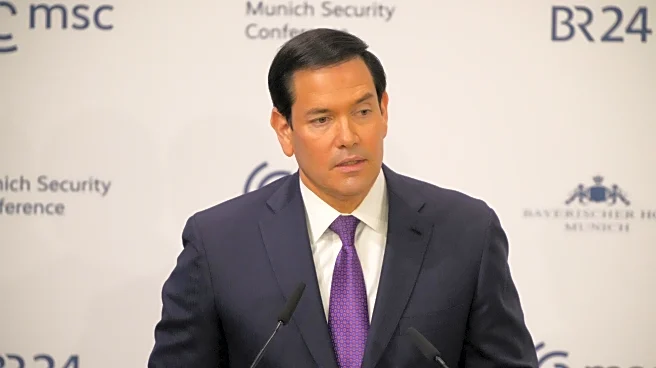
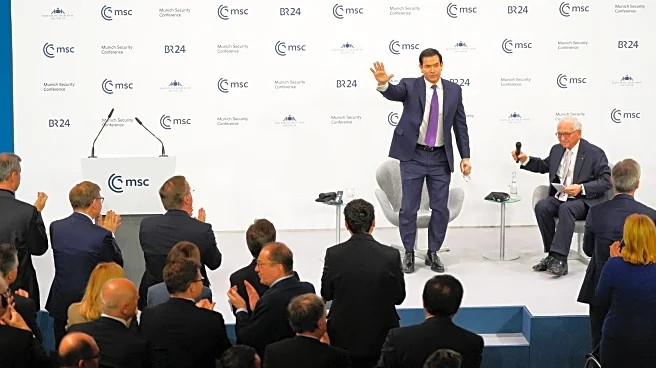
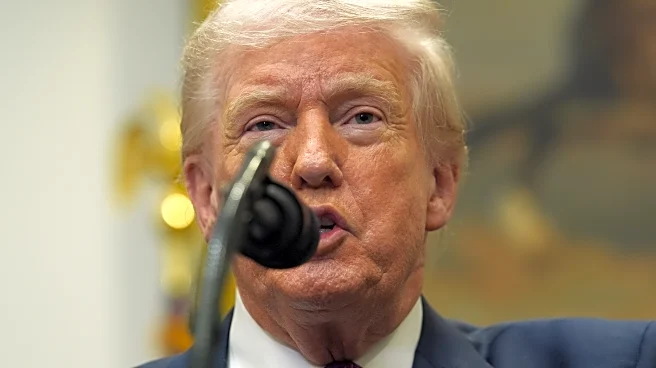
At the Munich Security Conference, German Chancellor Friedrich Merz criticized the U.S. for its unilateral approach under President Trump, emphasizing the need for a stronger European security strategy. Merz highlighted the limitations of the U.S. acting
alone in the current global power dynamics and called for a revival of transatlantic trust. He also discussed the potential for Europe to join France's nuclear umbrella and stressed the importance of NATO as a competitive advantage for both Europe and the U.S. Merz's speech was part of a broader dialogue on the future of the transatlantic partnership, amid tensions over U.S. tariffs and protectionist policies.
Why It's Important?
Merz's remarks underscore the growing rift between the U.S. and its European allies, which could have significant implications for international relations and global security. The criticism of U.S. unilateralism reflects broader concerns about the erosion of the international rules-based order and the need for Europe to assert its own security and economic interests. This development could lead to a shift in the balance of power within NATO and influence future U.S.-European relations, potentially affecting global trade, security policies, and diplomatic alliances.
What's Next?
The Munich Security Conference may prompt further discussions among European leaders about strengthening their collective security and economic strategies. The U.S. may face increased pressure to engage more collaboratively with its allies, particularly in addressing shared challenges such as climate change, trade, and geopolitical tensions. The outcome of these discussions could shape the future of NATO and influence the U.S.'s role in global affairs.