









What's Happening?
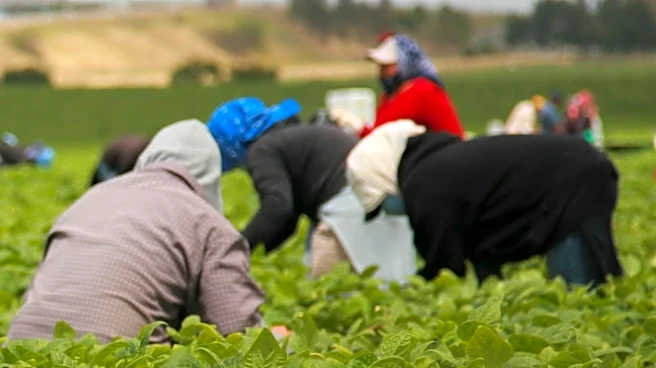
A screwworm outbreak in the American South has been detected in goats and sheep across three Texas counties, with 16 confirmed cases among animals. Agricultural workers, who are at high risk of infection, face significant challenges in accessing healthcare.
The U.S. Food and Drug Administration has issued emergency use authorizations for anti-parasitic medications for animals, but there are no specific treatments for human cases beyond manual extraction and off-label medications. The outbreak highlights the vulnerability of farm workers, who often work long hours, live in remote locations, and lack access to healthcare due to financial and language barriers.
Why It's Important?
The outbreak poses a significant threat to the $347.7 billion meat and poultry industry, as screwworms can cause substantial economic losses. The situation underscores the need for improved healthcare access for agricultural workers, who are crucial to the industry but often marginalized. The outbreak also raises concerns about zoonotic diseases and the importance of disease surveillance and prevention measures. Addressing these issues is vital for protecting public health and ensuring the stability of the agricultural sector.
What's Next?
Efforts to contain the outbreak include informing industry members about infection warning signs and urging them to postpone elective procedures that create open wounds. There is a push for collaboration with international partners to eradicate the screwworm and prevent future outbreaks. The situation calls for increased support for healthcare access for farm workers and enhanced disease monitoring to prevent similar incidents.