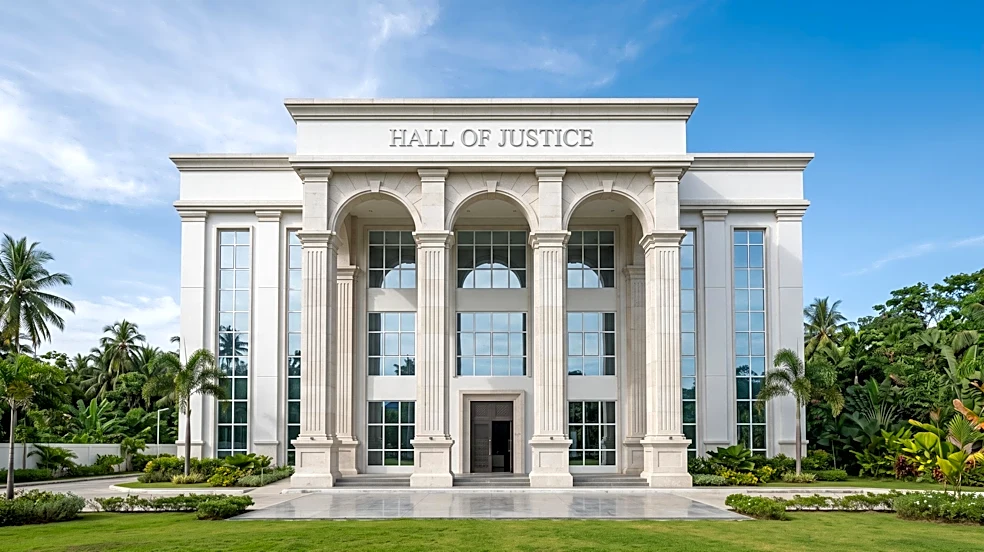











What's Happening?
President Marcos, alongside Chief Justice Alexander Gesmundo, inaugurated and turned over the Sulu Hall of Justice in Patikul town. This initiative is part of President Marcos's commitment to making judicial services more accessible to every Filipino.
The new facility aims to address long-standing challenges in the delivery of justice in Sulu, which have been hindered by limited facilities. President Marcos assured residents that Sulu would not be overlooked in the provision of government services. He highlighted the importance of institutions upholding the rule of law, protecting citizens' rights, and bringing government services closer to the people it serves. The government's efforts to improve access to justice include legal assistance programs, the digitalization of court processes, and measures to enhance the efficiency of judicial services.
Why It's Important?
The inauguration of the Sulu Hall of Justice signifies a crucial step towards strengthening the rule of law and ensuring equitable access to justice for all Filipinos, particularly in regions that have historically faced challenges in this regard. By improving judicial infrastructure and services, the government aims to foster greater trust in the legal system and enhance the protection of citizens' rights. This development can lead to more efficient legal proceedings, reduced backlogs, and a more transparent justice system. For the residents of Sulu, this means a more direct and less cumbersome path to legal recourse, potentially leading to improved social stability and economic development as legal uncertainties are reduced. Chief Justice Gesmundo's emphasis on integrity, independence, and fairness among judges and court personnel underscores the qualitative aspect of justice delivery, beyond just physical infrastructure.
What's Next?
Following the inauguration, the focus will likely shift to the operationalization of the new Sulu Hall of Justice and the implementation of the broader initiatives mentioned by President Marcos, such as legal assistance programs and the digitalization of court processes. Chief Justice Gesmundo's call for integrity and fairness among court personnel suggests an ongoing emphasis on ethical conduct and professional standards within the judiciary. The provincial government and Sulu Rep. Samier Tan, who assisted in realizing this vision, will likely continue to play a role in supporting the new facility and ensuring its effective functioning. Future efforts may include monitoring the impact of these improvements on the local community and potentially replicating similar initiatives in other underserved areas to further enhance nationwide access to justice.
Beyond the Headlines
The establishment of the Sulu Hall of Justice extends beyond mere infrastructure development; it represents a deeper commitment to nation-building and social equity. In regions like Sulu, where historical conflicts and limited resources have often marginalized communities, accessible justice can be a cornerstone for peace and development. This initiative could help in rebuilding trust between the government and its citizens, fostering a sense of belonging and equal protection under the law. Ethically, it reinforces the principle that justice should not be a privilege but a fundamental right, irrespective of geographical location or socio-economic status. Long-term, such investments in judicial infrastructure and processes can contribute to a more stable and just society, potentially attracting investment and promoting sustainable growth by ensuring a predictable legal environment.