

What's Happening?
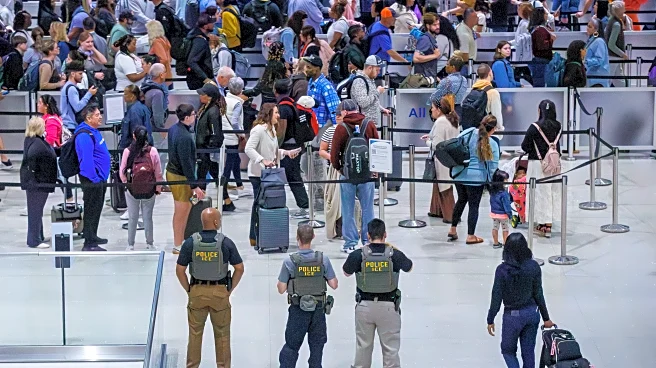
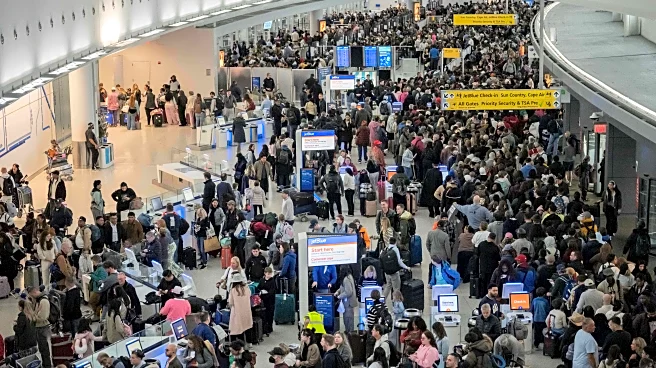
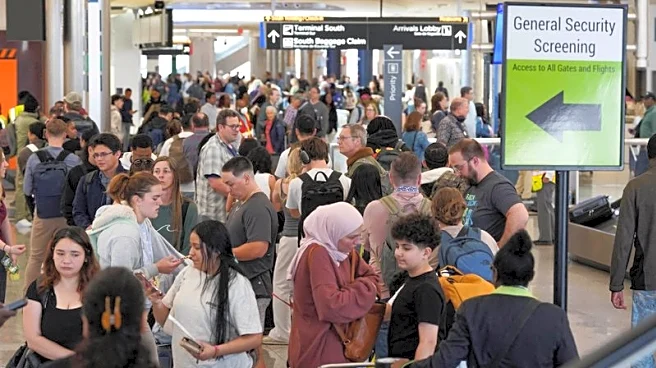
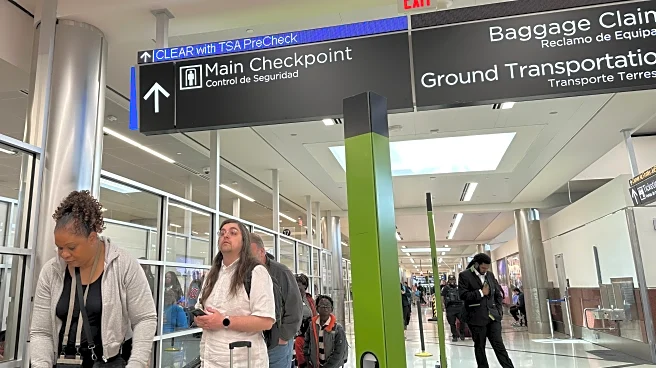
Senators are negotiating a potential resolution to the ongoing budget impasse affecting the Department of Homeland Security (DHS). The proposed deal aims to fund most of DHS, including the Transportation Security Administration (TSA), which has been operating
without pay, leading to significant delays at U.S. airports. However, the deal excludes funding for Immigration and Customs Enforcement's (ICE) enforcement and removal operations, a contentious point in the budget discussions. This development follows a meeting between Republican senators and President Trump, where they discussed the details of the proposal. Senate Majority Leader John Thune and Senate Democratic Leader Chuck Schumer have both expressed optimism about the progress of the negotiations. The proposal also includes measures to address Democratic concerns, such as mandating body cameras for officers and ensuring judicial oversight for immigration warrants.
Why It's Important?
The resolution of the DHS funding stalemate is crucial as it directly impacts airport operations and national security. The exclusion of ICE's enforcement operations from the funding package reflects ongoing political tensions over immigration policies. This compromise could ease airport congestion by ensuring TSA workers are paid, thus improving travel conditions during the busy spring season. Additionally, the proposed changes to ICE operations, such as increased oversight and accountability, could address public concerns over immigration enforcement practices. The outcome of these negotiations will have significant implications for U.S. immigration policy and the functioning of DHS.
What's Next?
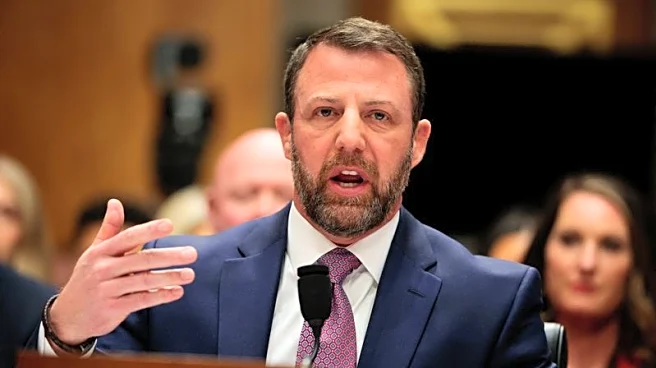
If the proposal is accepted, it will need to be formalized in writing and presented to both parties for further discussion. The Senate is expected to review the details during their weekly caucus meetings. The confirmation of Markwayne Mullin as the new Homeland Security Secretary may also influence the implementation of the proposed changes, as he has expressed support for increased judicial oversight of immigration operations. The negotiations will continue, with senators working to finalize the deal and address any remaining concerns from both parties.