
What's Happening?
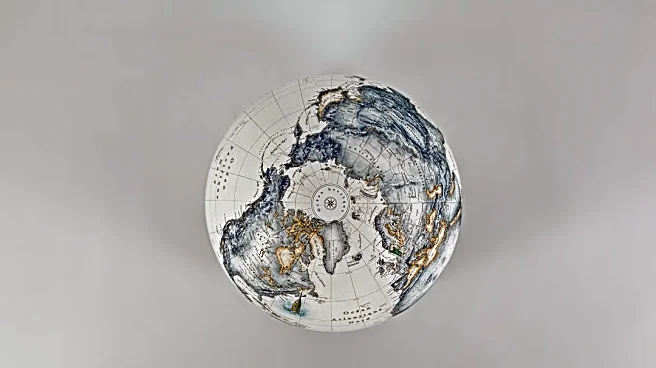
The Antarctic ozone hole reached its annual maximum extent on September 18, 2026, marking it as the seventh largest in 48 years of monitoring. Scientists define the ozone hole as the area where ozone concentrations
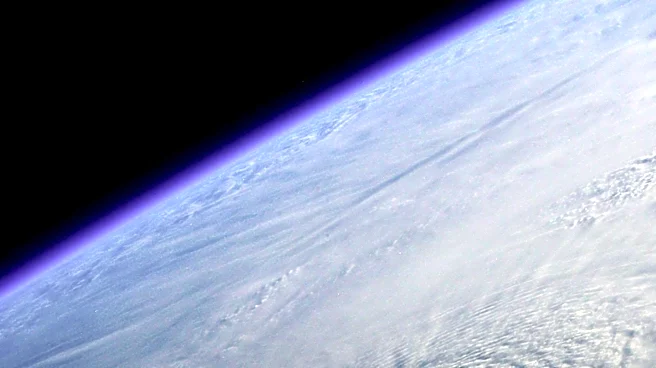
fall below 220 Dobson Units. While the 2026 hole was extensive in area, it was not as deep as some other large holes on record. This significant size is attributed to an unusually strong Antarctic polar vortex, which created optimal conditions for ozone depletion. The stratospheric ozone layer is crucial for protecting life on Earth by absorbing harmful ultraviolet light, which can damage DNA and cause skin cancer. The phenomenon of the ozone hole, first observed dramatically in 1985, is primarily caused by chlorofluorocarbons (CFCs) and human-produced bromine compounds, which release reactive chlorine atoms that destroy ozone in the stratosphere.
Why It's Important?
The continued large size of the ozone hole underscores the ongoing environmental impact of past human activities, despite international efforts to mitigate ozone-depleting substances. The Montreal Protocol, established in 1987, aimed to phase out the production and consumption of these chemicals, and models suggest that stratospheric chlorine concentrations will not return to pre-1980 levels until later in the 21st century. The persistence of a large ozone hole means that regions under its influence, particularly Antarctica, continue to experience elevated levels of harmful UV radiation. This has implications for ecosystems, including marine life and plant growth, and could potentially affect global climate patterns. For the U.S., understanding these global atmospheric changes is vital for informing environmental policy, public health advisories regarding UV exposure, and ongoing climate research.
What's Next?
Scientists estimate that the Antarctic ozone layer will return to 1980 levels in the 2070s, indicating a long recovery period. Ongoing monitoring by NASA and other international bodies will continue to track the ozone hole's size, depth, and recovery progress. Future research will focus on understanding year-to-year fluctuations, which are influenced by stratospheric temperature and circulation, and refining models to predict the long-term trajectory of ozone recovery. International cooperation, as exemplified by the Montreal Protocol, remains critical for ensuring the continued reduction of ozone-depleting substances and addressing other global atmospheric challenges. Public awareness campaigns about UV protection will also remain important, especially in regions affected by ozone depletion.
Beyond the Headlines
The ozone hole serves as a powerful historical example of how human industrial activities can have profound and long-lasting global environmental consequences. It highlights the interconnectedness of Earth's systems and the critical role of scientific research in identifying and addressing such issues. The success of the Montreal Protocol demonstrates the effectiveness of international collaboration in tackling environmental crises, offering a blueprint for addressing other complex global challenges like climate change. The slow recovery of the ozone layer also underscores the concept of environmental inertia, where the effects of past actions can persist for decades, necessitating sustained commitment to environmental protection and monitoring.