






What's Happening?
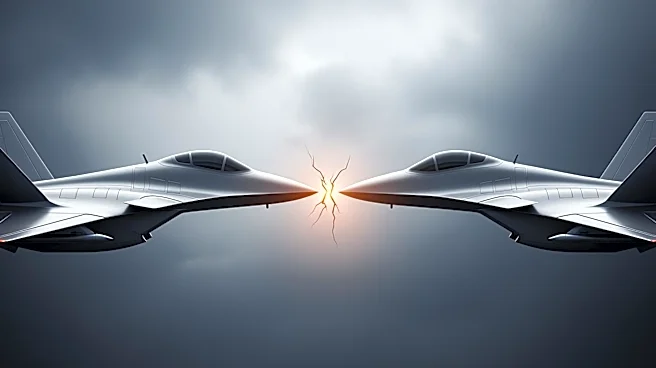
Germany and France have decided to terminate their joint fighter jet project, the Future Combat Air System (FCAS), due to unresolved industrial disagreements. The decision was confirmed by German officials, who stated that the companies involved could
not reach an agreement on the construction of the fighter jet. Despite the termination of the core fighter jet project, both nations plan to continue collaborating on the technology aspect, specifically focusing on the next-generation data-sharing 'system of systems.' This component is described as the 'nervous system' that integrates aircraft, drones, and other components into a cohesive whole. Discussions on future cooperation are scheduled for the Franco-German Ministerial Council meeting in Germany this July, where both defense ministries will draft a joint work plan for defense industry cooperation.
Why It's Important?
The termination of the FCAS project highlights significant challenges in international defense collaborations, particularly when industrial partners have conflicting interests. The project's dissolution could impact the defense capabilities of both Germany and France, as well as their strategic positioning within Europe. The decision also underscores the difficulties in achieving consensus on complex defense projects involving multiple stakeholders. The continuation of the 'system of systems' aspect suggests a shift towards more realistic and achievable goals, potentially leading to more efficient use of resources and better alignment with national defense priorities. The outcome of this decision may influence future defense collaborations and the approach to joint military projects in Europe.
What's Next?
Germany and France plan to hold discussions in July to outline a new work plan for defense industry cooperation, focusing on realistic and relevant projects. This meeting will be crucial in determining the future direction of their defense collaboration. The outcome of these discussions could set a precedent for how European nations approach joint defense projects, potentially leading to more streamlined and effective partnerships. Additionally, the decision may prompt other European countries involved in similar projects to reassess their strategies and collaboration models.