





What's Happening?
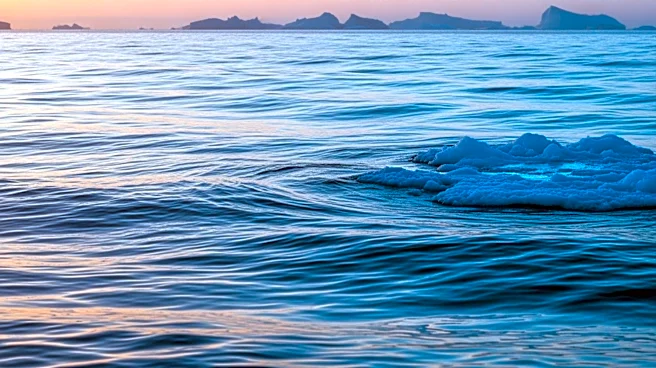
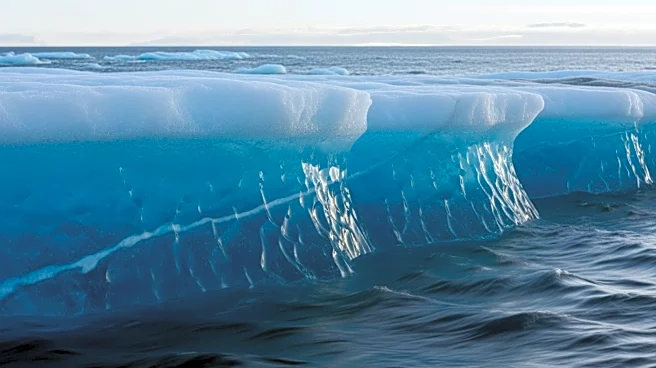
NASA's Earth Observatory has documented a significant retreat of the Hektoria Glacier on the Antarctic Peninsula, marking one of the fastest rates of glacial ice loss in modern history. Between January 2022 and March 2023, the glacier lost approximately
25 kilometers in length, including a rapid retreat of over 8 kilometers in just two months. This dramatic change was attributed to the glacier's unique geometry, which allowed seawater to infiltrate and lift the ice, leading to buoyancy-driven calving. The retreat was exacerbated by the collapse of the Larsen B ice shelf in 2002, which had previously stabilized the glacier. The study highlights the potential for similar events at larger glaciers, which could have more severe implications for global sea levels.
Why It's Important?
The rapid retreat of the Hektoria Glacier is a stark indicator of the impacts of climate change on polar ice masses. As glaciers like Hektoria lose their ice tongues and retreat, they contribute directly to rising sea levels, posing a threat to coastal communities worldwide. The study underscores the vulnerability of Antarctic glaciers to warming temperatures and oceanic changes, which could lead to more frequent and severe glacial retreats. This event serves as a warning of the potential for accelerated ice loss in other regions, which could have significant implications for global sea level rise and climate patterns.
What's Next?
Future monitoring of the Hektoria Glacier and similar ice masses will be crucial in understanding the dynamics of glacial retreat and its broader environmental impacts. New satellite technologies, such as NASA's NISAR and SWOT missions, are expected to provide detailed data on glacial movements and changes in ice mass. These tools will aid scientists in predicting future glacial behavior and assessing the risks associated with rapid ice loss. Continued research will be essential in developing strategies to mitigate the effects of sea level rise and protect vulnerable coastal areas.
Beyond the Headlines
The retreat of the Hektoria Glacier highlights the complex interplay between climate change and glacial dynamics. It raises ethical and policy questions about the responsibility of global actors to address climate change and its impacts. The event also emphasizes the need for international cooperation in climate research and the development of adaptive strategies to manage the consequences of rising sea levels. As the Antarctic Peninsula continues to warm, understanding the long-term shifts in glacial behavior will be critical in shaping future environmental policies.