

What's Happening?
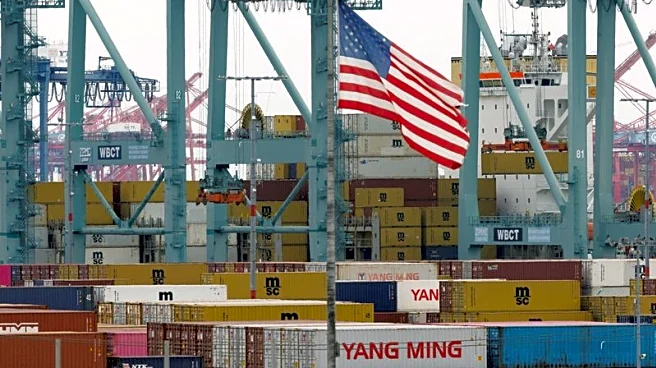
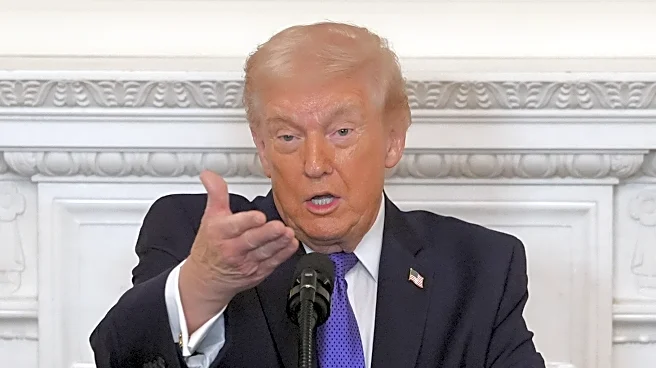
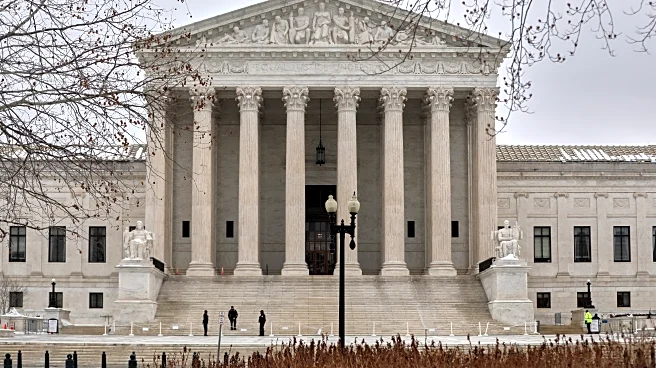
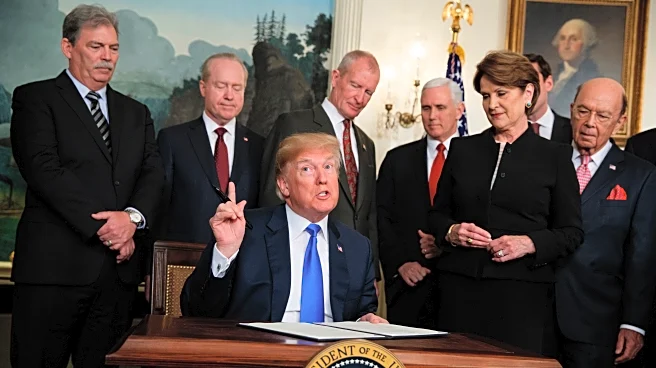
The U.S. Supreme Court has invalidated the global tariffs imposed by President Trump, marking a significant setback for his economic policies. The 6-3 decision focused on tariffs enacted under emergency powers, which affected nearly all international
trade partners. The ruling has been met with mixed reactions, particularly from the agricultural sector, which has been adversely affected by increased input costs and retaliatory tariffs. National Farmers Union President Rob Larew and U.S. House Agriculture Committee Ranking Member Angie Craig have expressed concerns about the tariffs' impact on farmers, urging the administration to avoid similar measures in the future. The decision is seen as a move towards restoring predictability in trade policy.
Why It's Important?
The Supreme Court's decision is crucial for the U.S. agricultural industry, which has faced increased costs and market disruptions due to the tariffs. The ruling could lead to reduced input costs and improved market access for American farmers, who have been struggling with high costs and lost revenue. The decision also highlights the need for a balanced trade policy that supports domestic industries without provoking international retaliation. The agricultural sector, which relies heavily on exports, stands to benefit from more stable trade relations and reduced barriers.
What's Next?
Following the ruling, there is potential for legislative action to ensure that trade policies are supportive of the agricultural sector. Congress may focus on developing a bipartisan farm bill that addresses current challenges faced by farmers. Additionally, there is a call for the administration to collaborate with Congress on comprehensive trade solutions that enhance market access and avoid further tariffs. The agricultural community will be closely monitoring any new trade policies that could impact their operations.