





What's Happening?
NASA has announced an accelerated schedule for its Artemis 3 mission, slated for mid-2027, which will feature a competition between SpaceX and Blue Origin to provide the lunar lander for future human missions to the Moon. The 14-day mission in Earth orbit
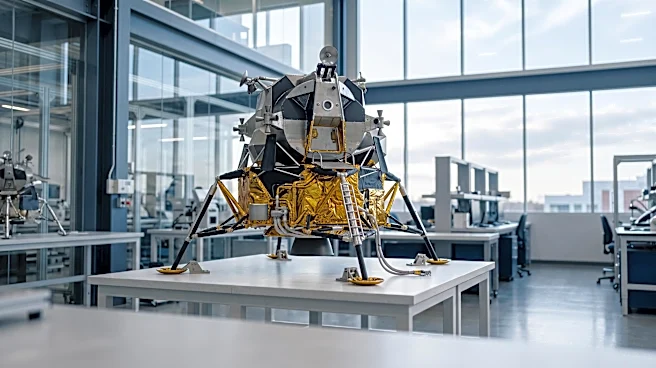
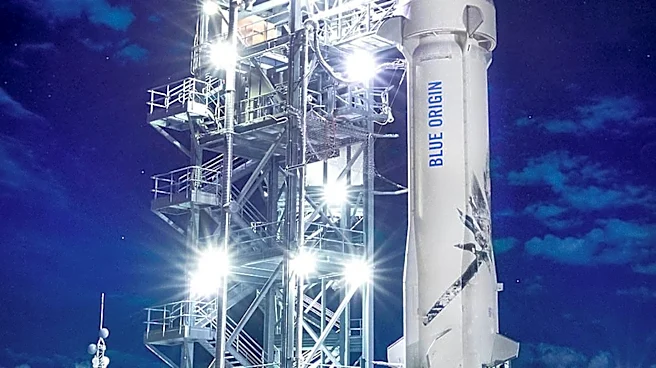
will test the rendezvous and docking capabilities of Blue Origin’s Blue Moon Mark 2 lander and SpaceX’s Starship Version 3 lander with NASA’s Orion capsule. During the mission, astronauts will transfer between the Orion capsule and Blue Moon for testing, while the Starship lander will undergo evaluation of its controllability, communications, and software performance without crew boarding. This mission is a critical stepping stone towards returning humans to the Moon, with a lunar landing planned for 2028. Amit Kshatriya, NASA associate administrator and chief engineer, emphasized the agency's commitment to speed while maintaining safety, despite external skepticism regarding the ambitious timeline.
Why It's Important?
This accelerated competition between SpaceX and Blue Origin is significant for the future of U.S. space exploration and the commercial space industry. By fostering competition, NASA aims to drive innovation and efficiency in lunar lander development, potentially reducing costs and accelerating technological advancements. The success of this mission will directly impact the timeline for returning humans to the Moon, a key objective of the Artemis program. Furthermore, the involvement of private companies like SpaceX and Blue Origin highlights a growing trend of public-private partnerships in space, shifting some development and operational responsibilities to commercial entities. This approach could lead to more sustainable and cost-effective space exploration in the long run, but also introduces challenges related to managing multiple contractors and integrating diverse technologies. The outcome of this competition will shape the future landscape of lunar transportation and influence the capabilities available for subsequent deep-space missions.
What's Next?
The Artemis 3 mission is scheduled for mid-2027, during which the Blue Moon Mark 2 and Starship Version 3 landers will undergo rigorous testing in Earth orbit. Following these tests, NASA will evaluate the performance of both landers to determine which company will provide the human landing system for the planned 2028 lunar landing. Beyond Artemis 3, NASA is already developing new operational concepts for its Artemis 4 mission, indicating a continuous and evolving plan for lunar exploration. The agency will need to address concerns from external experts regarding the ambitious timeline and the readiness of the commercial landers, particularly given that SpaceX’s Starship rocket has only reached Earth orbit once and Blue Origin’s New Glenn has not yet performed a test flight with Blue Moon. The coming years will involve further development, testing, and integration of these complex systems to ensure the safety and success of future lunar missions.
Beyond the Headlines
The competition between SpaceX and Blue Origin for the lunar lander contract extends beyond mere technical capabilities; it represents a broader philosophical shift in how the U.S. approaches space exploration. This strategy leverages the agility and innovation of the private sector, moving away from a purely government-led model. While this can accelerate progress and introduce new technologies, it also raises questions about the long-term sustainability of such partnerships and the potential for over-reliance on commercial entities. The 'space race' dynamic, not just between nations like the U.S. and China, but also between private companies, could drive unprecedented advancements. However, it also necessitates robust oversight and clear regulatory frameworks to ensure safety, ethical practices, and the equitable distribution of benefits from lunar resources. The success or failure of this approach will set precedents for future endeavors in space, influencing everything from asteroid mining to Mars colonization, and could redefine the role of government versus private enterprise in humanity's expansion into the cosmos.