
What's Happening?
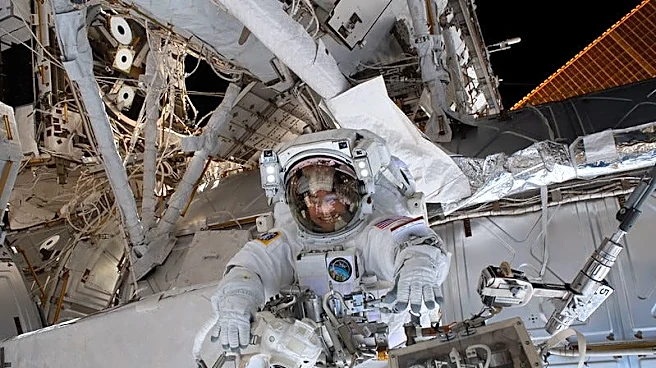
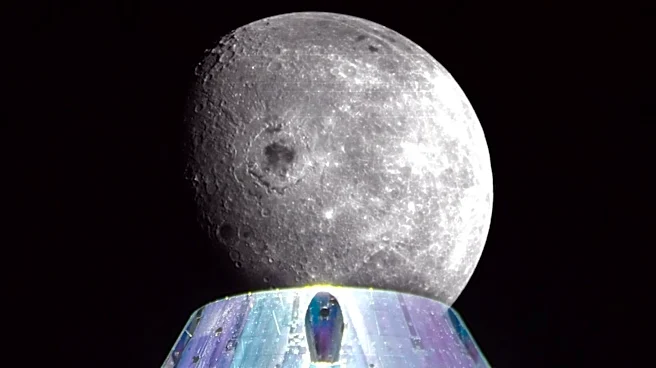
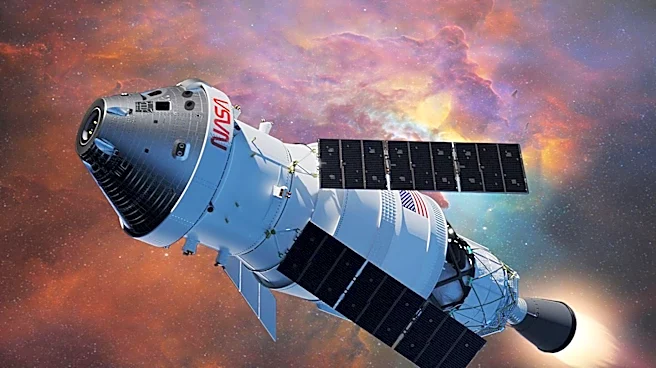
NASA is leveraging technology developed for the International Space Station (ISS) to enhance the Orion spacecraft, which is part of the Artemis program aimed at returning humans to the Moon. Key adaptations include life support systems that provide clean
air and water, crucial for long-duration space missions. Paul Boehm, Orion Crew Support and Thermal Systems manager, explains that technologies like the Thermal Amine Scrubber, which removes carbon dioxide and recovers water, are being integrated into Orion. These advancements are informed by lessons from past programs like Apollo and the space shuttle, ensuring that Orion is equipped for deep space exploration.
Why It's Important?
The integration of ISS-derived technologies into Orion is pivotal for the success of NASA's Artemis missions, which aim to establish a sustainable human presence on the Moon and eventually Mars. These technological adaptations not only enhance the safety and comfort of astronauts but also demonstrate NASA's ability to innovate and repurpose existing technologies for new challenges. This approach maximizes resource efficiency and accelerates the development timeline, crucial for maintaining the momentum of the Artemis program and achieving its ambitious goals.
What's Next?
As NASA continues to refine the Orion spacecraft, future missions will test these systems in real-world conditions, providing valuable data for further improvements. The success of Artemis II and subsequent missions will depend on the reliability of these life support systems. NASA's ongoing collaboration with international partners and private industry will be essential in advancing these technologies and ensuring the sustainability of lunar exploration efforts. The lessons learned from these missions will also inform the design of future spacecraft intended for Mars and beyond.