



What's Happening?
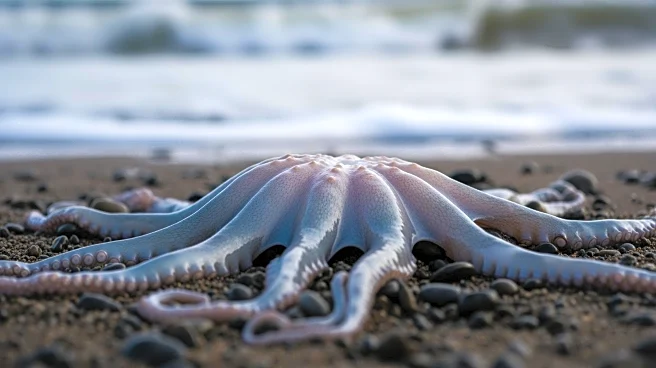
The remains of a rare seven-armed octopus, also known as a septopus, have been discovered on a beach in Collieston, Scotland. The creature, which typically resides in deep waters, was identified by researchers after being found by a beachcomber. The septopus is one
of the largest octopuses, capable of reaching lengths of 11 feet. It is so rare that only four have been seen alive in the last 40 years. The remains have been preserved for further study, with some potentially being displayed in museums.
Why It's Important?
The discovery of the septopus provides a unique opportunity to study a rare and poorly understood species. As a deep-sea creature, the septopus offers insights into marine biodiversity and the adaptations required for survival in extreme environments. The find also highlights the importance of coastal conservation and the role of public involvement in scientific discoveries. By studying the septopus, researchers can gain a better understanding of its ecological role and the potential threats it faces, contributing to marine conservation efforts.
What's Next?
The remains of the septopus will be analyzed by researchers to gain insights into its biology and ecology. This research could lead to new discoveries about the species and its adaptation to deep-sea environments. The findings may also inform conservation strategies for protecting marine biodiversity. As interest in the septopus grows, it could become a focal point for marine research and public education, raising awareness about the diversity and conservation of marine life.