

What's Happening?
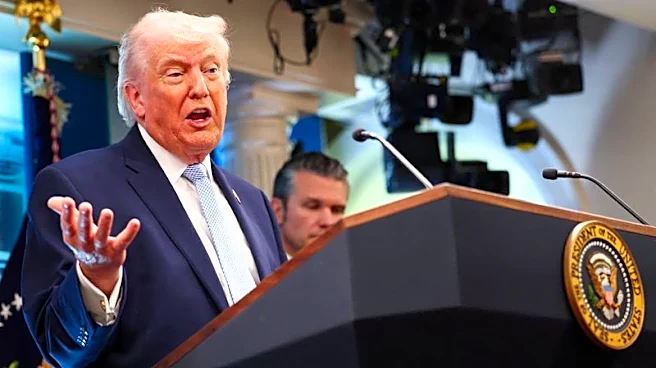
The Trump administration is set to implement automatic registration for the military draft, targeting all eligible men between the ages of 18 and 25. This move aims to streamline the selection process, should conscription be enforced for the first time
since the Vietnam War. The Selective Service System (SSS) will automatically register male citizens, including immigrants and transgender individuals born male, rather than relying on self-registration. This change comes amid fears of a prolonged conflict with Iran, although the White House has stated that a draft is not currently planned. The automatic registration rule was submitted to the Office of Information and Regulatory Affairs on March 30, following Congress's approval as part of the 2026 National Defense Authorization Act.
Why It's Important?
The automatic registration for the military draft represents a significant shift in U.S. military policy, potentially affecting millions of young men across the country. This change could lead to increased readiness for military engagement, particularly in light of ongoing tensions with Iran. The streamlined process may also impact workforce dynamics, as eligible men could face conscription during national emergencies. Additionally, the policy highlights the administration's focus on national security and military preparedness, which could influence public opinion and political discourse. The inclusion of immigrants and transgender individuals in the draft registration underscores evolving perspectives on military service eligibility.
What's Next?
If the draft is activated, registrants will enter a lottery system to determine the order of service. Those selected will undergo evaluations at Military Entrance Processing Stations. The administration may face legal and ethical challenges, particularly regarding the inclusion of transgender individuals and immigrants. Congress would need to amend the Military Selective Service Act to authorize conscription during emergencies. Public and political reactions could vary, with potential debates on the necessity and implications of reinstating the draft. The administration's approach to military readiness and national security will likely remain a focal point in upcoming policy discussions.
Beyond the Headlines
The automatic registration policy could have broader implications for civil rights and gender equality. While women are currently excluded from the draft, the SSS has indicated readiness to expand registration if Congress legislates mandatory service for women. This could spark debates on gender roles in the military and equal treatment under the law. The policy may also influence immigration discussions, as non-citizens are included in the draft registration. Ethical considerations regarding conscientious objectors and the penalties for non-registration could lead to further scrutiny and potential legal challenges.