




What's Happening?
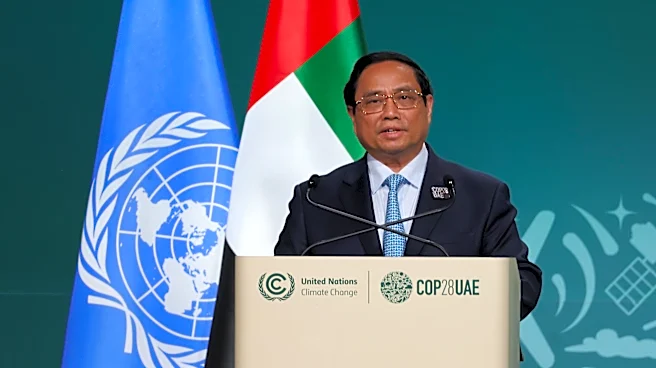
During the UN Climate Change Conference in Türkiye, Leiden University has highlighted several research findings that offer valuable insights into the climate crisis. One study indicates that a 'liana pandemic' is sweeping through tropical forests, reducing
their ability to store carbon and thus limiting their role in mitigating climate change. Another significant finding reveals that the top 10% of global consumers are responsible for causing up to $5.7 trillion in environmental damage annually, underscoring the disproportionate impact of high consumption. Furthermore, a clear UN majority, comprising 141 countries, has affirmed that states have a duty to prevent climate change, endorsing an advisory opinion issued last year by the International Court of Justice (ICJ). Researchers are also exploring the potential for climate solutions to create political and human dilemmas, particularly concerning the land rights of vulnerable groups. Additionally, industrial ecologist Stephanie Cap warns that while industry needs to become more sustainable, households also need to change their lifestyles to meet climate targets, emphasizing that businesses and governments must create the necessary conditions for these lifestyle changes.
Why It's Important?
Leiden University's research provides critical insights that are highly relevant to U.S. climate policy and societal discussions. The finding that a small percentage of consumers cause the majority of environmental damage directly challenges the narrative that climate action is solely an individual responsibility, shifting focus towards systemic changes and the role of high-income populations, including those in the U.S. This could influence policy debates on consumption patterns, carbon taxes, and wealth distribution. The UN majority affirming states' duty to prevent climate change strengthens the legal and moral imperative for the U.S. government to pursue aggressive climate policies and uphold international agreements. The 'liana pandemic' in tropical forests highlights a less-discussed aspect of climate change, potentially impacting global carbon sinks and biodiversity, which has implications for U.S. conservation efforts and international aid. The research on climate solutions creating human dilemmas, especially regarding land rights, underscores the need for equitable and just transitions, ensuring that climate policies do not inadvertently harm vulnerable communities within the U.S. or abroad. Finally, the call for businesses and governments to create conditions for lifestyle changes emphasizes the need for comprehensive policy frameworks that support sustainable living, rather than placing the entire burden on individual citizens.
What's Next?
The insights from Leiden University's research are expected to inform discussions at the UN Climate Change Conference and potentially influence future climate policies globally, including in the U.S. The emphasis on the disproportionate environmental damage caused by high consumers could lead to increased scrutiny of consumption patterns and calls for policies targeting high-carbon lifestyles. The affirmation of states' duty to prevent climate change by a UN majority provides a stronger legal basis for international climate action and could encourage more robust national commitments. Future efforts will likely focus on developing climate solutions that are not only effective but also socially just, addressing potential human dilemmas such as land rights. This may involve greater collaboration between governments, businesses, and civil society to design policies that facilitate sustainable lifestyle changes. The ongoing research into ecological impacts, like the 'liana pandemic,' will continue to provide crucial data for understanding and mitigating climate change, potentially leading to new conservation strategies and international partnerships aimed at protecting vital ecosystems.
Beyond the Headlines
Beyond the immediate policy implications, Leiden University's research delves into the ethical and cultural dimensions of climate change. The finding that a small percentage of consumers cause most environmental damage raises profound ethical questions about global inequality and responsibility. It challenges the notion of universal culpability and points towards a need for differentiated responsibilities in climate action, potentially influencing cultural norms around consumption and wealth. The research on climate solutions creating human dilemmas, particularly concerning land rights, highlights the complex interplay between environmental policy and social justice. This suggests that effective climate action must be deeply rooted in human rights principles, ensuring that transitions to sustainability do not exacerbate existing inequalities or create new forms of displacement. Culturally, these insights could foster a deeper societal dialogue about what constitutes a 'good life' and whether current consumption-driven models are sustainable or just. It may also encourage a shift towards valuing ecological well-being and social equity alongside economic growth, leading to long-term cultural transformations in how societies perceive their relationship with the environment.