



What's Happening?
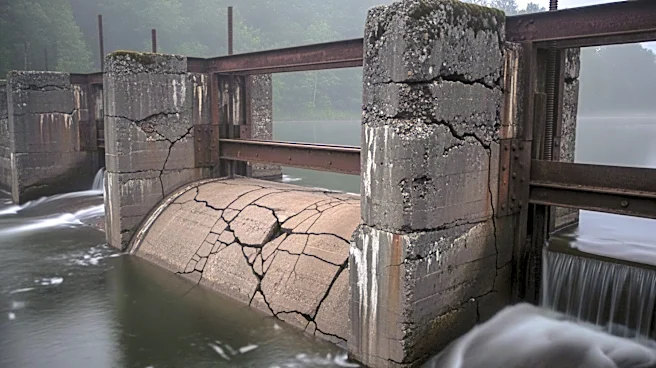
The Cheboygan Lock and Dam in Michigan is at risk of collapse due to years of neglect and regulatory delays. Local, state, and federal officials were aware of the dangers posed by the dam, but failed to compel private owners to make necessary repairs.
The dam's hydro plant, once a Charmin toilet paper mill, has changed ownership multiple times and fallen into disrepair. The current owner, Hom Paper XI, LLC, has not completed required repairs, and the dam is now at risk of failing due to recent floodwaters. The Federal Energy Regulatory Commission (FERC) has issued multiple warnings and extensions to the owners, but safety issues remain unresolved. The situation has prompted emergency efforts to bring the plant back online to prevent a potential disaster.
Why It's Important?
The potential failure of the Cheboygan Dam poses a significant threat to the surrounding community and environment. A collapse could result in a wall of water flooding downtown Cheboygan, causing extensive damage and endangering lives. The situation highlights the challenges of managing aging infrastructure, particularly when ownership is private and regulatory oversight is insufficient. The case underscores the need for comprehensive dam safety reforms and better coordination between federal and state agencies to prevent similar crises. The economic impact of a dam failure could be severe, affecting local businesses and residents, and raising questions about the adequacy of current regulatory frameworks.
What's Next?
Efforts are underway to address the immediate risk posed by the Cheboygan Dam. Emergency repairs are being funded by taxpayers, and state officials are coordinating with federal agencies to manage the situation. The long-term solution may involve transferring ownership to a public entity to ensure proper maintenance and oversight. The crisis has renewed calls for legislative action to improve dam safety regulations and prevent future incidents. Stakeholders, including local government and community leaders, are likely to push for reforms to address the systemic issues that have led to the current predicament.