





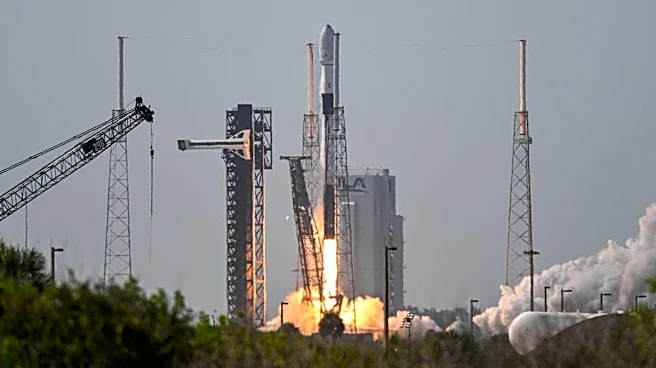


What's Happening?
Blue Origin experienced a significant setback when its launch pad was destroyed during a failed New Glenn rocket test. In response, NASA has offered to retrofit its B-2 testing pad at the Stennis Space Center in Mississippi to accommodate the New Glenn's
upper stage. This collaboration will allow Blue Origin to continue testing and progress towards launching its rockets again. The New Glenn rocket is crucial for NASA's plans to establish a lunar colony, as it is one of the two options for landing astronauts on the moon.
Why It's Important?
The incident highlights the challenges faced by private space companies in developing reliable launch systems. Blue Origin's partnership with NASA demonstrates the importance of collaboration between public and private sectors in advancing space exploration. By providing testing facilities, NASA is supporting Blue Origin's efforts to overcome setbacks and contribute to the U.S. space program. This collaboration is part of a broader trend of increasing commercialization in space exploration, as NASA seeks to leverage private industry capabilities to achieve its goals.
What's Next?
Blue Origin will continue rebuilding its launch pad and conducting tests at the Stennis Space Center. The company aims to resume rocket launches by the end of the year. Successful testing and launch of the New Glenn rocket are critical for Blue Origin to fulfill its role in NASA's lunar exploration plans. As the space industry evolves, further collaborations between NASA and private companies are expected to drive innovation and expand the capabilities of space exploration.