






What's Happening?
The Orland Park Village Board has voted to accept a $1 million grant from the Illinois Department of Natural Resources to fund flood mitigation efforts at Marley Creek. This decision comes in the wake of multiple tornadoes and severe storms that have
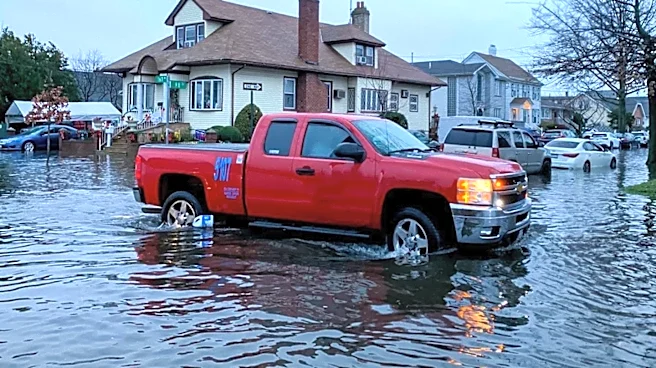
impacted the southwestern suburb, costing an estimated $1 million over the past month. The village also approved a local disaster declaration following the August 11 storms, which caused power interruptions, roadway hazards, and widespread debris. Mayor Jim Dodge expressed gratitude for the village's preparedness but acknowledged the increasing challenge of stormwater management due to more frequent and intense rainfall. The grant will be used to develop a stormwater basin and preservation area near Marley Creek, with the total project cost, including property acquisitions and ecological restoration, estimated at $4 million. The village anticipates receiving additional grant money for its efforts in converting commercially developed land back to native plantings.
Why It's Important?
This initiative by Orland Park underscores a growing national concern regarding flood resilience and the financial implications of climate change for U.S. municipalities. The $1 million grant, part of a larger $4 million project, highlights the significant investment required to adapt to changing weather patterns. The village's proactive approach to flood mitigation, including land acquisition and ecological restoration, sets a precedent for other communities facing similar challenges. The increasing frequency of severe storms, as noted by Mayor Dodge, directly impacts public safety, infrastructure, and local economies. This situation also emphasizes the critical role of state and federal grants in supporting local efforts, as many municipalities would struggle to fund such extensive projects independently. The 'win-win-win' scenario of demolishing abandoned structures for ecological restoration demonstrates an integrated approach to urban planning and environmental protection, offering both immediate flood control benefits and long-term ecological advantages.
What's Next?
Orland Park will proceed with the development of the stormwater basin and preservation area near Marley Creek, utilizing the $1 million grant from the Illinois Department of Natural Resources. The village expects to complete this phase by June 30, 2029. Efforts to stabilize the bank and improve water flow at Tinley Creek are also ongoing. Village officials will continue to seek additional grant funding, particularly for projects involving ecological restoration and native plantings. Mayor Dodge hopes for reimbursement for some of the costs incurred during the recent storms, indicating ongoing engagement with higher levels of government for financial assistance. The village's disaster declaration will help document storm damage and costs, which will be submitted for potential state and federal aid. Orland Park's focus will remain on proactive stormwater management and increasing storm resilience to protect its residents and infrastructure from future severe weather events.
Beyond the Headlines
The Orland Park case reflects a broader national shift towards recognizing and actively addressing the impacts of climate change at the local level. The village's investment in green infrastructure, such as stormwater basins and native plantings, represents a move beyond traditional 'gray' infrastructure solutions, potentially influencing future urban development and environmental policy. This approach not only mitigates flood risks but also contributes to biodiversity and ecosystem health, offering co-benefits that extend beyond immediate disaster prevention. The financial burden of these projects, even with grant support, raises questions about long-term funding mechanisms for climate adaptation across the U.S. It also highlights the increasing importance of intergovernmental collaboration and the need for comprehensive national strategies to support local resilience efforts. The 'win-win-win' aspect of the project could serve as a model for sustainable development, demonstrating how environmental protection can align with economic and safety objectives.