

What's Happening?
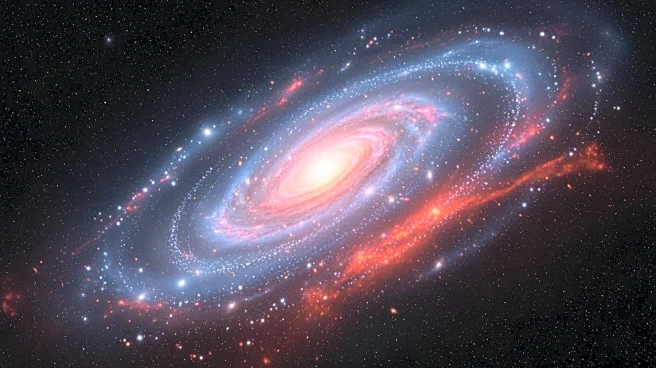
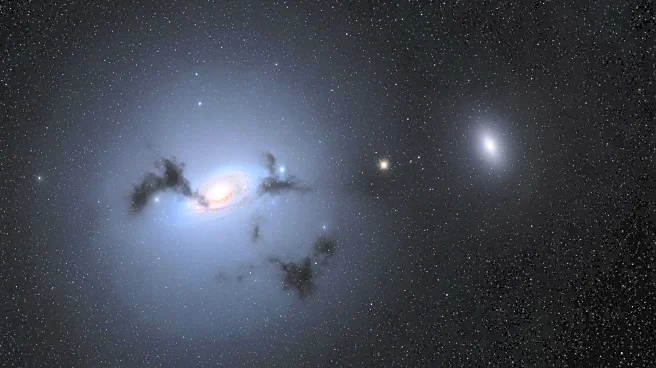
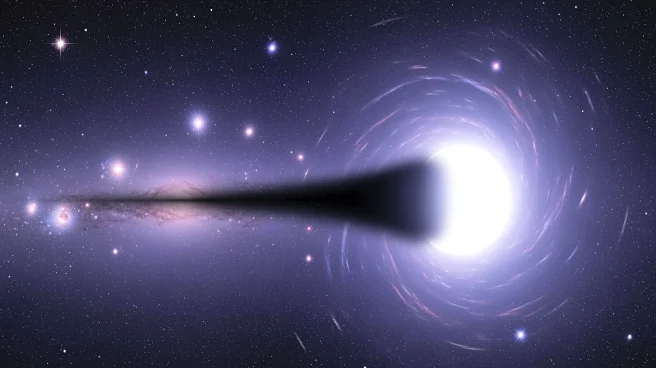
Researchers have observed a significant astronomical event where a star, named M31-2014-DS1, in the Andromeda Galaxy transformed into a black hole without the typical supernova explosion. This star, initially 13 times more massive than the sun, was tracked
over four decades. It brightened in 2015 before almost disappearing, indicating its transformation into a black hole. The event is detectable only through a subtle glow from gas and dust being drawn into the black hole. This discovery, led by astrophysicist Kishalay De from the Flatiron Institute and Columbia University, provides rare observational evidence of black hole formation without a supernova, suggesting that many black holes may form quietly. The star's mass and the lack of a supernova explosion are key factors in this transformation.
Why It's Important?
This discovery is significant as it challenges the traditional understanding of black hole formation, which typically involves a supernova explosion. The findings suggest that black holes can form quietly, without the explosive events previously thought necessary. This could mean that many more black holes exist than currently estimated, as they might form without detectable supernovae. The research provides new insights into the life cycle of massive stars and the conditions under which they collapse into black holes. This could impact astrophysical models and our understanding of the universe's structure, potentially leading to revisions in how astronomers search for and study black holes.
What's Next?
Researchers are eager to determine how common this quiet form of black hole formation is. They have already identified another star that may have undergone a similar transformation. Future studies will focus on understanding the conditions that lead to such quiet collapses and refining theoretical models to predict black hole formation. This could involve more detailed observations of other stars nearing the end of their life cycles and further analysis of the remnants left by such transformations. The findings may also prompt a reevaluation of existing data to identify other potential black holes formed without supernovae.