







What's Happening?
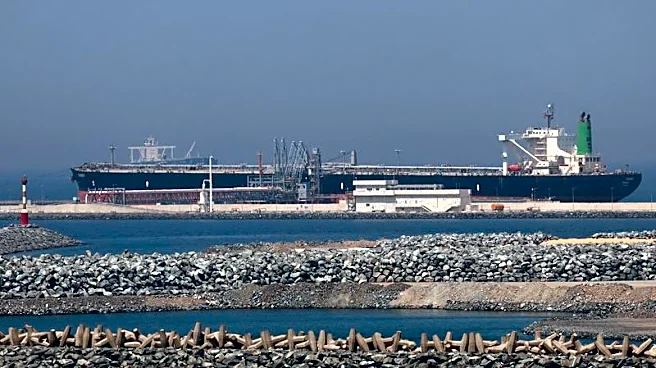
The United Arab Emirates (UAE) has announced its departure from the Organization of the Petroleum Exporting Countries (OPEC) and OPEC+, effective May 1, 2026. This decision marks the end of nearly 59 years of membership in the oil cartel. The UAE, which
was producing approximately 3.5 million barrels of oil per day, is now free from the quota system that has regulated its output. This move could potentially add over 1 million additional barrels per day to the global oil market, equivalent to the daily oil consumption of a country like Spain. The decision to leave OPEC is rooted in longstanding tensions with Saudi Arabia, the de facto leader of the organization. These tensions date back to territorial disputes in the 1950s and have been exacerbated by disagreements over oil production quotas and differing strategies in regional conflicts, particularly in Yemen.
Why It's Important?
The UAE's exit from OPEC could significantly impact global oil markets by increasing supply, which may lead to lower oil prices. This is particularly beneficial for oil-importing nations such as China, which is the world's largest crude importer. The move also highlights a strategic shift in the UAE's economic policy, focusing more on global growth and production flexibility rather than solely on crude prices. This decision reflects the UAE's broader economic strategy, which includes becoming a hub for digital assets and blockchain infrastructure. The UAE's departure from OPEC signals a move towards economic independence and diversification beyond hydrocarbons, potentially affecting global energy markets and geopolitical dynamics.
What's Next?
With the UAE's increased oil production capacity, global oil supply could expand, potentially easing supply bottlenecks and reducing prices. This development may lead to increased volatility in crude prices, affecting tokenized oil products and energy-focused decentralized finance (DeFi) protocols. The UAE's strategic pivot towards technology, finance, and trade suggests that it is positioning itself for a future less reliant on coordinated petroleum diplomacy. The response from other OPEC members and global oil markets will be crucial in determining the long-term impact of the UAE's decision.