







What's Happening?
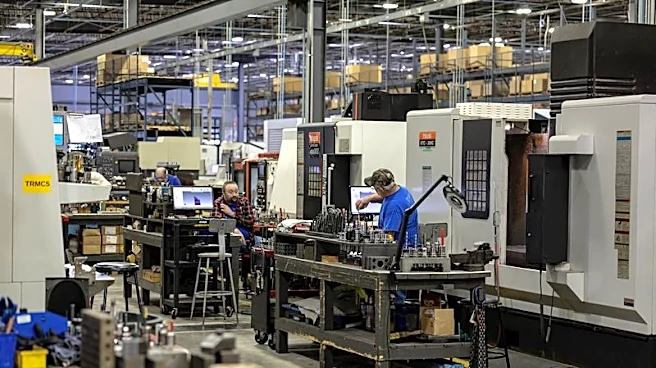
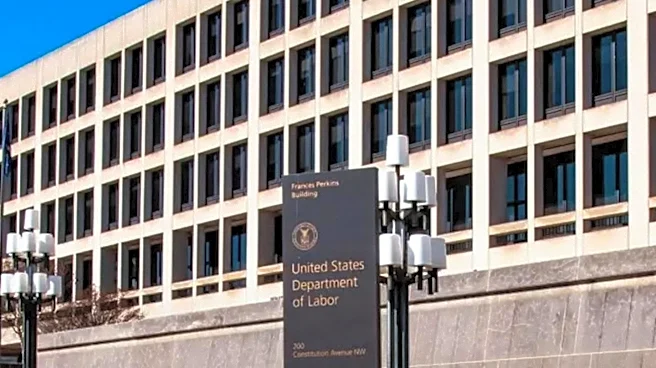
U.S. employers significantly increased their job postings in September, with job openings jumping to 7.5 million from a revised 7.19 million in August, according to the Labor Department's Job Openings and Labor Turnover Survey (JOLTS). This marks the highest
number of openings since May and a notable rise from a recent low of 6.9 million in March. The report also indicated an increase in gross hiring and a decrease in layoffs during September. This surge in job postings suggests that stronger economic growth may be encouraging more hiring, offering a hopeful sign for the labor market. However, despite these positive indicators, voters remain largely pessimistic about the economy due to persistent higher prices.
Why It's Important?
The sharp increase in U.S. job postings is a critical indicator for the nation's economic health. A rise in job openings typically precedes an increase in hiring, suggesting that employers are becoming more confident about future demand and are willing to expand their workforces. This could lead to a more robust labor market, potentially reducing unemployment rates and increasing wage growth, which would benefit American households. However, the report also highlights a paradox: while job security remains high due to historically low layoffs, finding new employment has been challenging due to sluggish hiring over the past three years. This 'low churn' environment means that while those employed are secure, those seeking jobs face significant hurdles. The disconnect between positive job market data and public sentiment, driven by inflation, underscores the complex economic challenges facing the country.
What's Next?
For the recent increase in job postings to translate into a sustained improvement in the labor market, this trend would need to continue for several months. Economists and policymakers will closely monitor future JOLTS reports and other labor market data, such as unemployment rates and payroll additions, to determine if September's jump is an anomaly or the beginning of a more significant hiring acceleration. If hiring picks up, it could alleviate some of the public's economic concerns, but the impact of inflation on consumer sentiment will remain a critical factor. Businesses may respond to increased demand by continuing to post more jobs, potentially leading to a more dynamic labor market with greater opportunities for job seekers.
Beyond the Headlines
The current state of the U.S. labor market, characterized by high job security for the employed but difficulty for job seekers, points to deeper structural issues. The 'low churn' environment suggests a lack of dynamism, where fewer people are voluntarily leaving jobs for better opportunities, and employers are hesitant to make new hires. This could be due to a variety of factors, including economic uncertainty, skills mismatches, or increased automation. While a surge in job postings is positive, the long-term health of the labor market depends on fostering an environment where both job creation and job mobility are robust. Addressing the underlying causes of low churn and ensuring that the workforce has the skills needed for available jobs will be crucial for sustainable economic growth and broader prosperity, especially as inflation continues to impact household budgets.