
What's Happening?
The total solar eclipse on August 2, 2027, is anticipated to be a significant international tourism event, with its path of totality stretching across southern Europe, North Africa, and the Middle East.
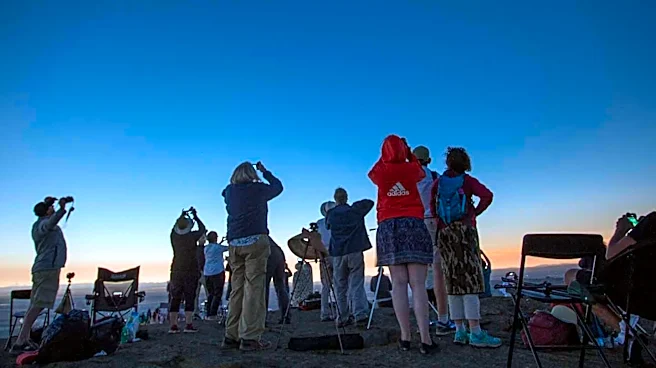
While Luxor, Egypt, is highlighted for its exceptional 6 minutes and 23 seconds of totality, the longest possible on Earth that day, the eclipse path offers diverse viewing locations including beaches, mountains, deserts, and ancient cities. Travelers are advised to prioritize being within the path of totality, as even a 99% partial eclipse does not offer the full experience of darkness, temperature drop, and visibility of the sun's corona. The path will be approximately 160 miles (260 kilometers) wide, providing ample viewing opportunities. Key considerations for planning include researching flight connections, visas, accommodation, transportation, and local infrastructure, as not all destinations are equally accessible. The event is expected to draw considerable attention, leading to tours filling up and accommodations being booked well in advance.
Why It's Important?
This total solar eclipse holds significant importance for the tourism and travel industries across multiple continents. The event is expected to drive substantial international travel, boosting local economies in southern Spain, Morocco, Algeria, Tunisia, Libya, Egypt, Saudi Arabia, Yemen, and Somalia. Businesses in these regions, including hotels, tour operators, and transportation services, stand to gain from the influx of visitors. For individuals, the eclipse offers a rare astronomical spectacle, but careful planning is crucial to avoid disappointment. Misconceptions, such as the need to be on the centerline of totality or that a partial eclipse offers a similar experience, can lead to missed opportunities. The event also underscores the importance of understanding geographical and meteorological factors, as clear skies are more critical than maximizing the duration of totality. The high sun angle and extreme temperatures in some locations will necessitate specific health and safety precautions for travelers.
What's Next?
As the August 2, 2027, total solar eclipse approaches, prospective travelers should continue to monitor tour availability and accommodation options, particularly in popular destinations like Luxor. It is crucial for individuals to verify that their chosen viewing location is firmly within the path of totality. Travelers should also begin researching visa requirements and local travel advisories for their preferred destinations. As the event draws closer, short-range weather forecasts will become increasingly important for selecting optimal viewing sites. Tour companies and travel agencies will likely continue to refine their packages, and travelers should meticulously review what is included, such as transportation to observing sites, certified eclipse glasses, and provisions for water and shade, especially given the high temperatures expected in many areas. The coming months will see increased marketing and information dissemination regarding the best viewing practices and safety measures.
Beyond the Headlines
Beyond the immediate economic and tourism impacts, the 2027 total solar eclipse highlights broader themes of scientific literacy and the human fascination with celestial events. The emphasis on being within the path of totality, rather than settling for a partial eclipse, underscores the qualitative difference in astronomical phenomena and the importance of accurate information. The event also brings into focus the challenges of large-scale international travel and event management, including logistical complexities, cultural sensitivities, and environmental considerations in diverse regions. The advice to integrate the eclipse into a broader travel experience, rather than solely focusing on the few minutes of totality, reflects a growing trend in experiential tourism. Furthermore, the need for preparedness regarding extreme weather conditions, such as high temperatures, serves as a reminder of the impact of climate on outdoor events and the importance of personal safety in remote or challenging environments.