







What's Happening?
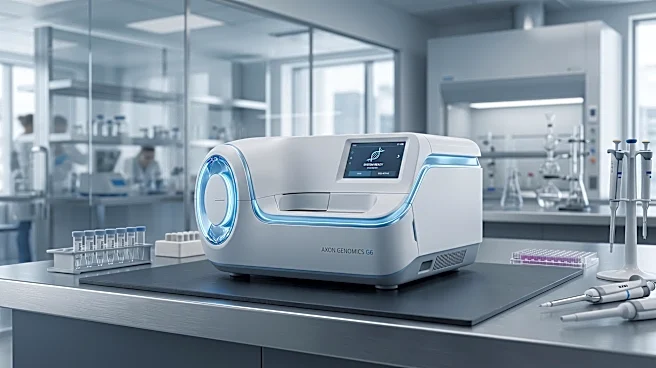
A consortium of Portuguese companies, universities, and research centers has developed a new technology called InviDx, capable of identifying bacteria and genes associated with antibiotic resistance in approximately 45 minutes. This device, developed under
the SMARTgNOSTICS project, can detect up to ten different targets in a urine sample, including specific bacteria and antimicrobial resistance genes. This significantly reduces the time compared to current standard practices, which typically take 48 to 72 hours for conventional urine cultures to identify bacteria and assess antibiotic sensitivity. InviDx uses molecular analysis techniques to identify the genetic material of microorganisms and their resistance mechanisms, eliminating the need to wait for bacteria to multiply in a laboratory.
Why It's Important?
The rapid identification of antibiotic-resistant bacteria is crucial for effective patient treatment and combating the global rise of antimicrobial resistance. Current delays in diagnosis can lead to the empirical use of broad-spectrum antibiotics, which contributes to resistance development and may not be effective against the specific infection. By providing preliminary results in just 45 minutes, InviDx can enable healthcare professionals to make more informed decisions about antibiotic prescriptions much faster. This can lead to more targeted therapies, reducing the overuse of inappropriate antibiotics, improving patient outcomes, and potentially saving lives. The technology's ability to quickly identify resistance genes also aids in epidemiological surveillance, helping to track and control the spread of resistant strains within healthcare settings and communities.
What's Next?
Currently, InviDx is available exclusively for research purposes and has not yet been authorized as a clinical diagnostic device. The first approved clinical study using this technology will focus on urinary tract infections and will be conducted at the Unidade Local de Saúde da Cova da Beira in Portugal. While the speed of identification is a significant advantage, the results from InviDx must be interpreted by healthcare professionals and may require supplementation with additional laboratory tests to determine the most appropriate antibiotic for a given patient. The consortium plans to expand the platform's application in the future to identify agents associated with respiratory infections, sepsis, and sexually transmitted infections, and potentially to monitor antibiotic resistance in wastewater.
Beyond the Headlines
The development of rapid diagnostic tools like InviDx represents a significant step towards personalized medicine in infectious disease management. By quickly identifying the specific pathogen and its resistance profile, clinicians can move away from a 'one-size-fits-all' approach to antibiotic treatment. This has profound ethical implications, as it minimizes patient exposure to ineffective or overly broad antibiotics, reducing side effects and preserving the patient's microbiome. Legally, the regulatory pathway for such rapid diagnostic devices will be critical, ensuring accuracy, reliability, and integration into existing healthcare systems. Culturally, this technology could foster greater public awareness about antibiotic resistance and the importance of precise diagnostics, potentially shifting patient expectations towards more targeted and evidence-based treatments.