


What's Happening?
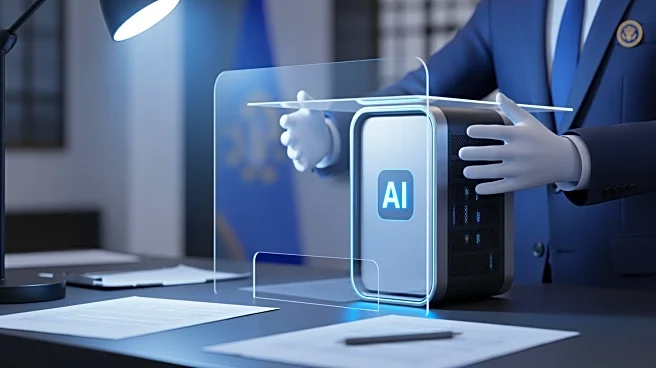
The Trump administration has blacklisted Anthropic, a private AI company, from defense contracts, citing its refusal to allow its AI technology to be used for mass domestic surveillance or autonomous weapons. This decision follows President Trump's directive
to federal agencies to cease using Anthropic's AI tools. In contrast, OpenAI has secured a defense contract by agreeing to a framework with the Department of Defense that includes specific guardrails against such uses. The standoff highlights a broader conflict between the Pentagon and private AI firms over who sets the terms for AI's military applications. Anthropic's CEO, Dario Amodei, insists on ethical limits, while the Pentagon argues for broader discretion under 'lawful use.' OpenAI's agreement includes safeguards against mass surveillance and autonomous weapons, aligning with some of Anthropic's concerns.
Why It's Important?
This conflict underscores the tension between national security needs and ethical considerations in AI deployment. The Pentagon's decision to blacklist Anthropic could disrupt military AI operations, as Anthropic's technology is integral to defense planning. The situation raises questions about the balance of power between the government and private AI developers, potentially affecting U.S. leadership in AI technology. For Anthropic, the stakes are high, as the dispute could deter other companies from engaging with the government if ethical concerns are penalized. OpenAI's agreement may set a precedent for future contracts, influencing how AI is integrated into national security.
What's Next?
The resolution of this standoff could redefine the relationship between the U.S. government and AI companies. If the Pentagon enacts the Defense Production Act, it could further complicate the legal landscape. OpenAI's call for similar terms to be offered to all AI labs suggests a push for standardized agreements. The outcome may influence future negotiations and the ethical frameworks governing AI's military use. Stakeholders, including legal scholars and policy analysts, will closely watch how this conflict unfolds, as it could impact the broader AI industry and its regulatory environment.