




What's Happening?
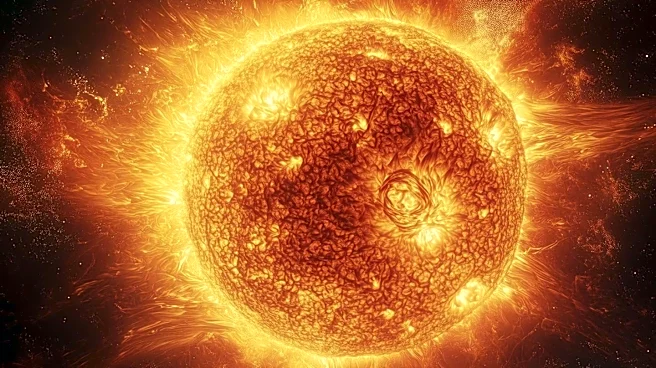
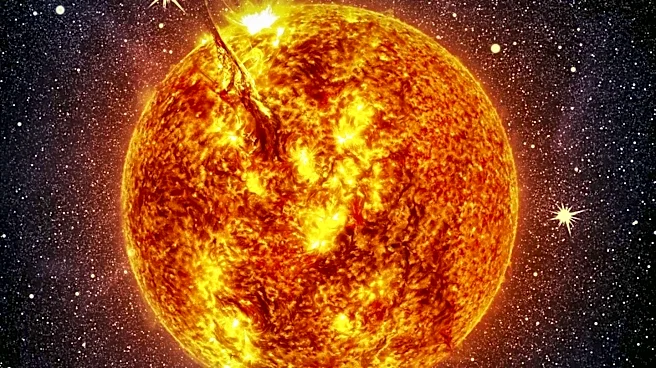
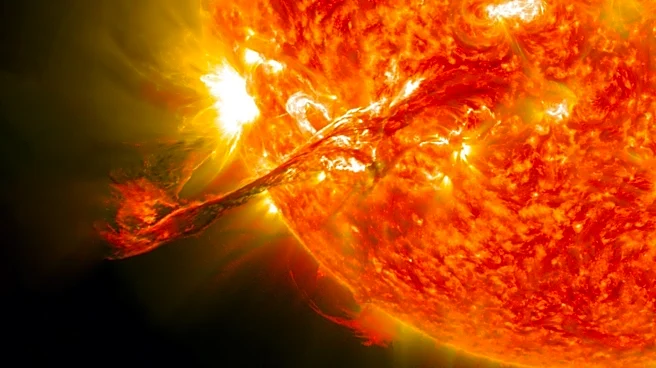
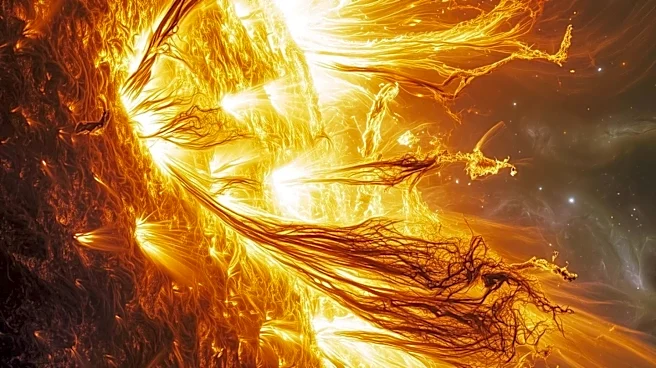
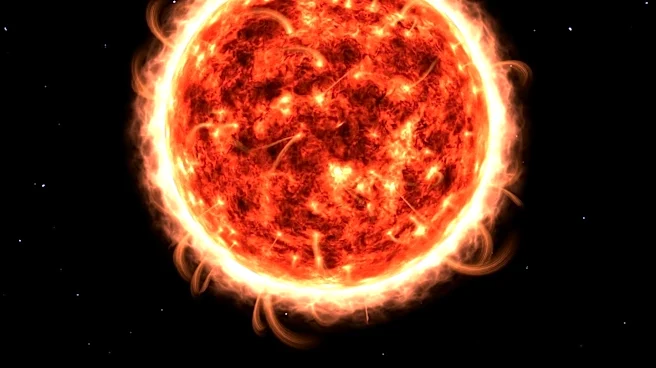
NASA has reported a strong solar flare that peaked just before 5 p.m. on Tuesday, as captured by its Solar Dynamics Observatory. This solar flare, classified as an X1.1 flare, is one of the most intense types of solar flares. It caused significant degradation
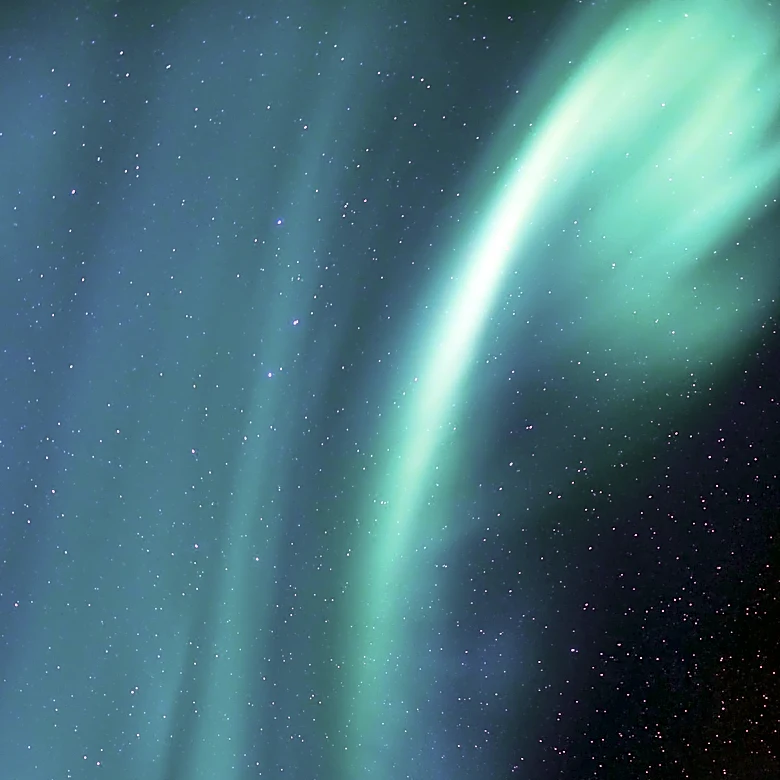
or loss of high-frequency (HF) communication bands over much of the sunlit side of the Earth, affecting radio users in North America for minutes to hours. The flare also launched a coronal mass ejection (CME), a large cloud of magnetized solar plasma, into space. Initial observations suggest that most of the CME material is traveling northward, which may limit its impact on Earth. The National Oceanic and Atmospheric Administration’s Space Weather Prediction Center has issued a Moderate (G2) geomagnetic storm watch for July 3, indicating potential geomagnetic storms and aurora displays.
Why It's Important?
The occurrence of such a strong solar flare has significant implications for various sectors. High-frequency radio communication is crucial for aviation, maritime, and emergency services, and disruptions can lead to operational challenges. Additionally, solar flares can impact electric power grids, potentially causing power outages or damage to infrastructure. The geomagnetic storms resulting from CMEs can also affect satellite operations and pose risks to astronauts in space. The potential for aurora displays, while visually spectacular, underscores the broader impact of solar activity on Earth's magnetic field and technological systems.
What's Next?
With the Space Weather Prediction Center's geomagnetic storm watch in place, stakeholders in affected industries are likely to monitor the situation closely. Power grid operators, satellite companies, and communication service providers may take precautionary measures to mitigate potential disruptions. The scientific community will continue to observe solar activity to better predict and understand the impacts of such events. Public interest in aurora displays may increase, particularly in regions where they are not commonly visible.