



What's Happening?
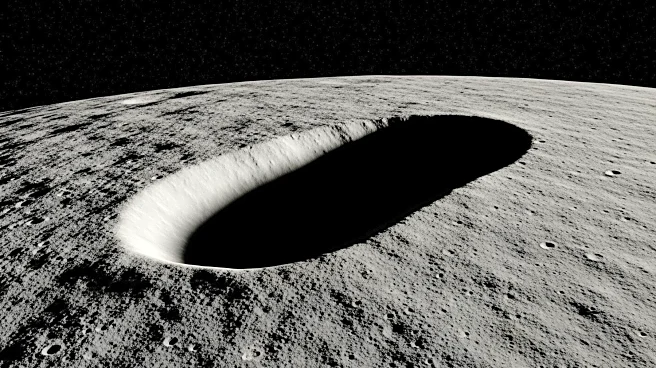
Astronomy enthusiasts have the opportunity to observe a unique lunar feature known as Aries' Hoofprint. This feature is located on the Moon and is named for its resemblance to a hoofprint. It can be found near the Mare Serenitatis, or the Sea of Serenity,
in the northern hemisphere of the Moon. The feature is situated just northeast of the crater Triesnecker and is accompanied by the volcanic rille Rima Hyginus. The Moon is currently in its First Quarter phase, providing an ideal time for observation.
Why It's Important?
Observing lunar features like Aries' Hoofprint offers valuable insights into the Moon's geological history and surface composition. Such observations can enhance our understanding of lunar volcanism and the processes that shaped the Moon's surface. For amateur astronomers and the general public, these features provide an engaging way to connect with astronomy and appreciate the complexities of celestial bodies. Additionally, studying the Moon's surface can inform future lunar exploration missions and the potential for human settlement.
What's Next?
As the Moon continues its orbit, different features will become visible, offering ongoing opportunities for observation and study. Astronomers and enthusiasts can look forward to observing other lunar phenomena, such as eclipses and meteor showers, which provide further insights into the dynamics of our solar system. Continued observation and research will contribute to a deeper understanding of the Moon and its role in Earth's history and future exploration efforts.
Beyond the Headlines
The fascination with lunar features like Aries' Hoofprint highlights the enduring human interest in space exploration and the mysteries of the universe. It underscores the importance of scientific inquiry and the role of technology in expanding our knowledge of celestial bodies. As we continue to explore the Moon and beyond, these observations remind us of the vastness of space and the potential for discovery that lies ahead.