


What's Happening?
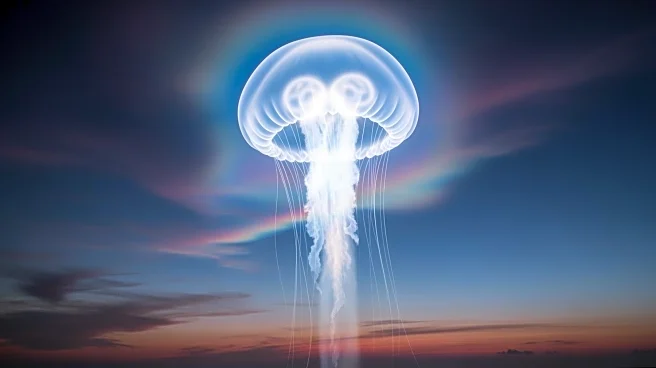
A SpaceX Falcon 9 rocket launch from Cape Canaveral Space Force Station in Florida created a spectacular 'space jellyfish' effect in the sky. The launch, which occurred at approximately 5:50 AM on March 4, 2026, carried 29 Starlink satellites into low
Earth orbit. As the rocket ascended, its exhaust gases expanded in the upper atmosphere, forming a dome-like shape reminiscent of a jellyfish. This phenomenon was visible from as far away as Georgia and along the East Coast. The first stage of the rocket, Booster 1080, successfully landed on a droneship in the Atlantic Ocean. SpaceX's growing constellation of satellites, now nearing 10,000 units, continues to raise concerns among astronomers about potential impacts on astronomical observations.
Why It's Important?
The 'space jellyfish' phenomenon highlights the visual impact of rocket launches, which can be both awe-inspiring and concerning. The increasing number of satellites launched by SpaceX for its Starlink broadband service is a significant development in global internet connectivity. However, the proliferation of satellites poses challenges for astronomers, as they can obstruct views of the night sky and interfere with space telescopes like Hubble. This situation underscores the need for balancing technological advancements with the preservation of scientific research capabilities.