


What's Happening?
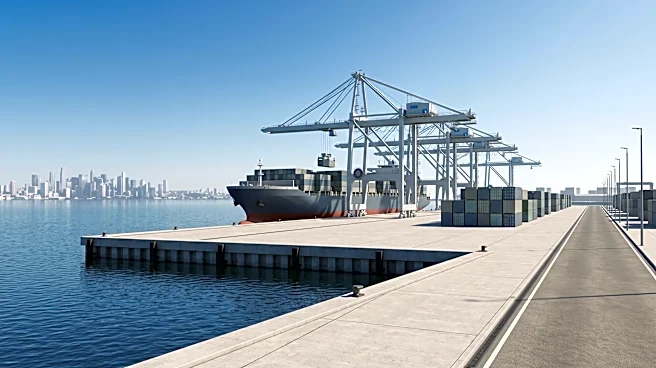
The 122-acre Brooklyn Marine Terminal, a long-underutilized waterfront expanse, is set for a significant transformation into a 21st-century maritime district. This ambitious vision plan, spearheaded by the New York City Economic Development Corporation
(NYCEDC) with Buro Happold as the planning lead, aims to integrate climate-forward industry, affordable mixed-use development, and next-generation resiliency infrastructure. For decades, the terminal has been a largely disinvested asset, but the new plan seeks to reactivate it for both economic justice and environmental stewardship. A core component of the redevelopment is a 60-acre, all-electric port designed to reduce the city's freight emissions and enhance supply-chain resilience. This project is a key element of New York City's 'Harbor of the Future' strategy, which aims to position the harbor as a testing ground for climate innovation and modern logistics. The plan also includes the integration with the Blue Highways system, an initiative by NYCEDC and NYC DOT to shift freight from trucks to maritime routes, thereby reducing street congestion and creating new maritime jobs.
Why It's Important?
This redevelopment of the Brooklyn Marine Terminal is crucial for New York City and could serve as a national model for urban waterfront planning. It addresses the dual challenges of climate adaptation and industrial decline faced by coastal cities across the U.S. By creating a climate-resilient maritime district, the project aims to protect the city from rising sea levels and storm surges, while simultaneously fostering economic growth through green industry and modern logistics. The emphasis on an all-electric port will significantly reduce freight emissions, contributing to cleaner air and improved public health in surrounding communities. Furthermore, the plan's commitment to affordable housing, with at least 40 percent of 6,000 new homes being permanently affordable, addresses critical housing needs and promotes economic inclusion. This integrated approach demonstrates how aging industrial waterfronts can be revitalized to support both environmental sustainability and equitable community development, offering a blueprint for other cities grappling with similar issues.
What's Next?
The Brooklyn Marine Terminal redevelopment is expected to proceed with significant construction and infrastructure development in the coming years. The project will involve the construction of the all-electric port, mixed-use residential buildings, commercial spaces, and climate resilience infrastructure such as raised site elevations and floodwalls. The newly formed Brooklyn Marine Terminal Development Corporation and an Advisory Task Force, comprising local leaders and community stakeholders, will oversee the project through the General Project Plan process, ensuring alignment with community priorities. Major investments, including $200 million for NYCHA repairs and a $50 million housing preservation fund, are planned to distribute benefits beyond the immediate site. The project is projected to create over 37,000 construction jobs and 2,000 permanent roles in maritime, industrial, commercial, and residential sectors. Continued monitoring of environmental impacts and community engagement will be vital as the project progresses, with the potential for it to become a leading example of sustainable urban waterfront transformation.
Beyond the Headlines
The Brooklyn Marine Terminal project represents a profound shift in urban planning philosophy, moving beyond traditional industrial or purely recreational waterfront development to embrace a holistic, climate-adaptive, and socially equitable model. This initiative challenges the notion that industrial heritage must be sacrificed for modern development, instead demonstrating how legacy port districts can evolve into resilient, mixed-use hubs. The integration of environmental justice into the climate resilience approach is particularly significant, aiming to mitigate historical environmental harms in underserved communities. This project also highlights the growing importance of public-private partnerships and community governance in large-scale urban redevelopments, ensuring that the benefits are shared broadly. The 'Harbor of the Future' concept, with its focus on climate innovation and modern logistics, could redefine how cities view their waterfronts—not just as economic engines or recreational spaces, but as critical platforms for addressing climate change, fostering green industries, and building more inclusive urban environments.