




What's Happening?
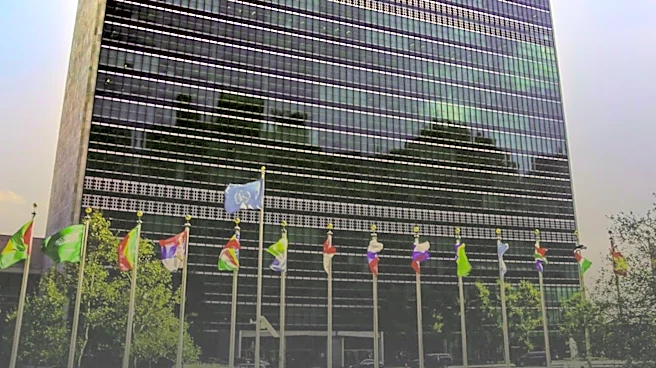
The United Nations Charter, specifically Article 47, established the Military Staff Committee with the intention of advising and assisting the Security Council on military requirements and the deployment and command of forces. This committee was designed
to support a military structure where member states would conclude special agreements under Article 43 to make armed forces available to the Security Council. However, these special agreements were never concluded. Consequently, the Security Council did not acquire the standing military capabilities originally envisioned by the Charter, and the Military Staff Committee did not evolve into the operational command institution it was intended to be. This absence of standing UN forces has significantly shaped the nature of United Nations military enforcement, leading to reliance on ad hoc authorizations for member states or multinational coalitions.
Why It's Important?
The failure to establish standing UN military forces, as originally conceived, has profound implications for international peace and security. It means that the Security Council's ability to enforce its resolutions, particularly those involving military action, is heavily dependent on the political will and resources of individual member states. This reliance can lead to inconsistent responses to global crises, as interventions are often contingent on the strategic interests and capabilities of powerful nations. For the U.S., this means that its military contributions and leadership are frequently sought for UN-authorized operations, placing a significant burden and influence on its foreign policy and defense resources. The lack of a unified, standing UN force also complicates rapid response to emerging threats and can lead to delays in humanitarian interventions or peacekeeping efforts, potentially exacerbating conflicts and human suffering.
What's Next?
Given the historical context, it is unlikely that the special agreements under Article 43 will be concluded in the near future, meaning the Security Council will continue to rely on ad hoc authorizations for military enforcement. Discussions may persist regarding reforms to the Security Council's structure and decision-making processes, including the use of the veto power, which often hinders collective action. Member states will likely continue to engage in debates about burden-sharing and the effectiveness of current peacekeeping and enforcement mechanisms. The international community will also continue to explore alternative approaches, such as strengthening regional security organizations and enhancing their cooperation with the UN, to address global security challenges in the absence of a standing UN military force.
Beyond the Headlines
The unfulfilled vision of a standing UN military force highlights a deeper tension within international relations: the balance between national sovereignty and collective security. While the Charter provides a framework for collective action, the reluctance of member states to cede military control to an international body underscores their prioritization of national interests and autonomy. This dynamic affects not only military interventions but also broader issues of international governance and cooperation. The ongoing debate about the Security Council's effectiveness, particularly in light of veto power usage, is intrinsically linked to this foundational issue. The absence of a truly independent UN military arm means that the enforcement of international law and the protection of human rights often remain subject to the geopolitical calculations of powerful nations, raising ethical questions about impartiality and accountability in global security operations.