




What's Happening?
President Donald Trump has announced a 10-day ceasefire between Lebanon and Israel, marking the first formal talks between the two nations in 34 years. This development comes as part of a broader diplomatic effort to stabilize the region, particularly
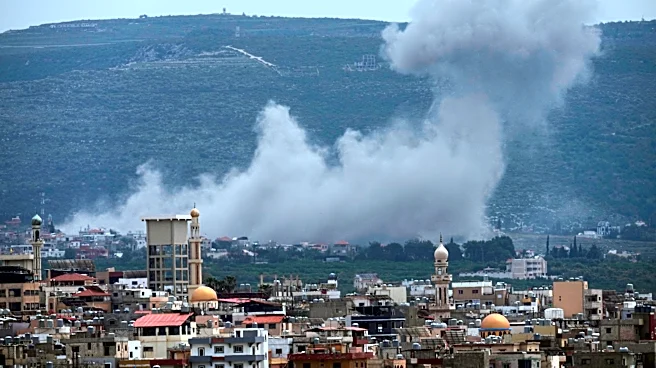
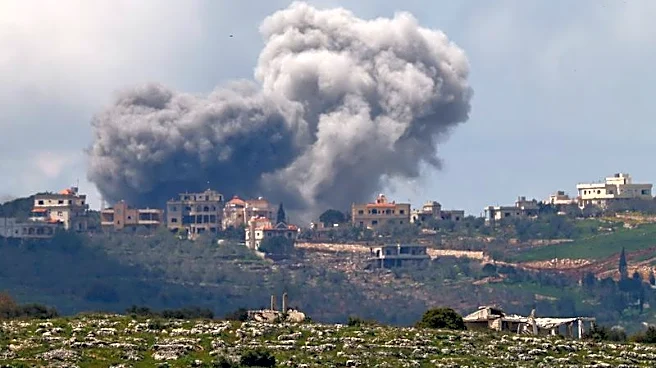
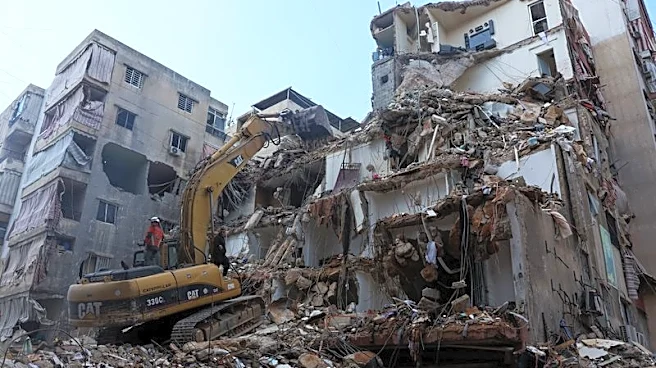
in light of the ongoing U.S.-Iran ceasefire negotiations. The announcement followed a conversation between President Trump and Lebanese President Joseph Aoun, where Trump expressed his commitment to facilitating the ceasefire. Despite the agreement, Hezbollah, a significant player in the region backed by Iran, has expressed opposition to the talks. The U.S. has been actively mediating in the region, with Pakistan playing a crucial role in facilitating discussions. The ceasefire is seen as a step towards broader peace talks, although challenges remain, particularly with Hezbollah's stance and Israel's ongoing military operations against the group.
Why It's Important?
The ceasefire between Lebanon and Israel is significant as it represents a potential shift towards peace in a historically volatile region. The involvement of the U.S. underscores its strategic interest in Middle Eastern stability, particularly concerning Iran's influence. The ceasefire could lead to reduced hostilities, benefiting civilians in the region and potentially opening pathways for further diplomatic engagements. However, the opposition from Hezbollah and Israel's continued military actions highlight the fragility of the agreement. The U.S.'s role in mediating these talks also reflects its broader geopolitical strategy to counter Iranian influence and stabilize key regions, which could have implications for U.S. foreign policy and military engagements.
What's Next?
The next steps involve monitoring the ceasefire's implementation and addressing the challenges posed by Hezbollah's opposition. Diplomatic efforts are likely to continue, with potential for further negotiations involving key regional players. The U.S. and its allies may need to engage in more comprehensive talks to address underlying issues, such as Hezbollah's disarmament and broader regional security concerns. The success of these efforts could influence future U.S. diplomatic and military strategies in the Middle East.