






What's Happening?
UCLA researchers have discovered that wildfire smoke simultaneously attacks two critical defenses of the human airway: paralyzing cilia that clear mucus and loosening the protein seals between airway lining cells. This damage allows harmful particles
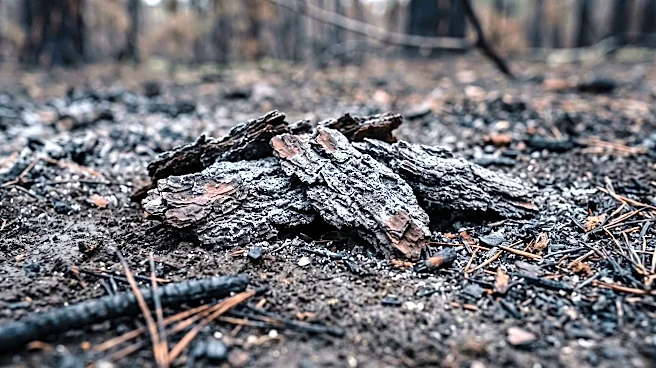
to penetrate deeper into the body. The study, published in Environmental Health Perspectives, involved analyzing nasal and sinus tissue from Los Angeles residents during and after the 2025 Palisades and Eaton wildfires, which showed significant damage to airway linings. To further investigate, researchers developed a method to expose lab-grown human airway tissue to pine bark smoke, mimicking wildfire conditions. They found that repeated smoke exposure accumulated damage, severely impairing ciliary movement and weakening the airway barrier. Crucially, the team identified a cell signaling pathway, MEK/ERK, that contributes to this damage and found that blocking it with an MEK inhibitor preserved both cilia movement and the airway barrier in the lab-grown tissue.
Why It's Important?
Wildfire smoke is increasingly reversing gains in air quality, with fire seasons now extending year-round, posing a growing public health crisis. Fine smoke particles are linked to severe health issues including lung disease, stroke, heart disease, and cancer. Understanding the precise mechanisms by which smoke damages airways is vital for developing effective protective measures. This research offers a significant breakthrough by identifying a specific cellular pathway involved in smoke-induced damage, opening the door for targeted interventions. The potential development of an inhaler or nasal spray that blocks this pathway could provide a crucial preventative tool for high-risk individuals, such as firefighters and those with pre-existing lung or heart conditions, mitigating the long-term health consequences of smoke exposure.
What's Next?
The UCLA team is now focused on developing a preventative product, such as an inhaler or nasal spray, that can deliver the MEK inhibitor directly to the airways. This product would be designed for use before anticipated smoke exposure, offering protection to individuals at high risk, including firefighters, military personnel exposed to burn pits, and those with medical vulnerabilities like children and people with lung or heart disease. The next steps involve formulating the compound for inhalation and conducting safety studies. The ultimate goal is to create an affordable and widely accessible over-the-counter product that can be used globally to shield airways from the damaging effects of wildfire smoke.
Beyond the Headlines
This research not only addresses the immediate health impacts of wildfire smoke but also highlights the broader implications of climate change on public health infrastructure. The increasing frequency and intensity of wildfires necessitate innovative medical solutions to protect populations. The ethical considerations include ensuring equitable access to any developed preventative treatments, particularly for communities disproportionately affected by wildfires. The study also underscores the importance of interdisciplinary research, combining atmospheric science, environmental health, and cellular biology, to tackle complex environmental challenges. The concept of a preventative inhaler could represent a paradigm shift in how public health responds to environmental hazards, moving from reactive treatment to proactive protection.