
What's Happening?
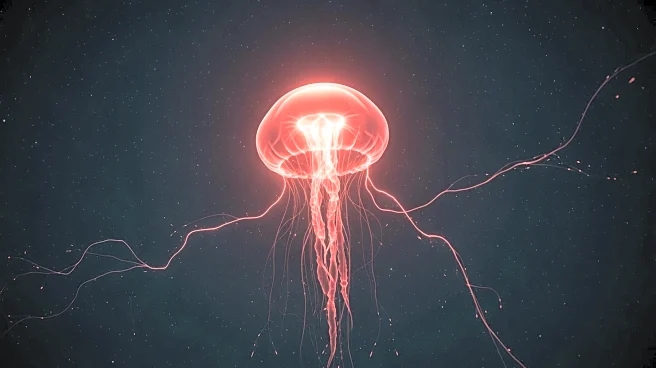
NASA has recently shared an image that has sparked intrigue and comparisons to the popular TV show 'Stranger Things.' The image depicts a phenomenon known as 'sprites,' which are fleeting red flashes above
thunderstorm clouds. These sprites, often referred to as 'red jellyfish' due to their appearance, are a type of red lightning. Unlike regular lightning that extends downward, sprites shoot upwards into the upper atmosphere and last only for a millisecond, making them rare and difficult to study. This phenomenon typically occurs during intense thunderstorms and is considered one of Earth's most elusive electrical events.
Why It's Important?
The occurrence of sprites is significant as it adds to the understanding of atmospheric phenomena and electrical activity during thunderstorms. Studying these rare events can provide insights into the dynamics of thunderstorms and the upper atmosphere. This knowledge is crucial for meteorologists and scientists who aim to improve weather prediction models and understand the electrical processes in the atmosphere. Additionally, public interest in such phenomena can enhance awareness and education about atmospheric science, potentially inspiring future research and technological advancements in weather monitoring.
What's Next?
As sprites are challenging to capture and study due to their brief appearance, ongoing research and technological advancements are necessary to better understand these phenomena. Scientists may continue to develop specialized equipment and techniques to observe and analyze sprites more effectively. This could lead to improved predictive models for thunderstorms and a deeper understanding of atmospheric electricity. Furthermore, public interest in such phenomena may drive increased funding and support for atmospheric research initiatives.
Beyond the Headlines
The fascination with sprites and their comparison to fictional elements like those in 'Stranger Things' highlights the intersection of science and popular culture. This phenomenon underscores the importance of science communication in making complex scientific concepts accessible and engaging to the public. By leveraging popular culture references, scientists and educators can foster greater interest and understanding of scientific phenomena, potentially inspiring the next generation of scientists and researchers.