



What's Happening?
Two prominent Latino civil rights groups, a voting rights organization, and the city of Denver have filed a lawsuit against the Trump administration. The lawsuit aims to prevent armed immigration enforcement agents from being present at polling places
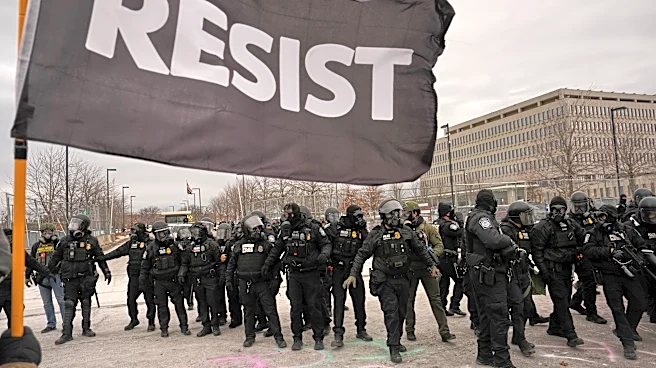
during elections. The plaintiffs are invoking a Civil War-era criminal law that generally prohibits federal officials from deploying 'troops or armed men' to locations where elections are being held. This legal action comes amidst concerns that the presence of armed federal agents could intimidate voters and interfere with the electoral process, particularly in communities with significant immigrant populations.
Why It's Important?
This lawsuit is highly significant as it addresses fundamental questions about voter access, intimidation, and the integrity of the electoral process in the United States. The presence of armed federal agents at polling places could create a chilling effect, deterring eligible voters, especially those from minority and immigrant communities, from exercising their right to vote. This directly impacts democratic participation and could disproportionately affect election outcomes in certain areas. The invocation of a Civil War-era law underscores the historical precedent for preventing military or armed interference in civilian elections, highlighting the long-standing principle of separating military and law enforcement functions from the electoral process. The outcome of this lawsuit could set a crucial precedent for how federal agencies operate during elections and define the boundaries of federal presence at polling sites, thereby safeguarding the democratic rights of citizens.
What's Next?
The lawsuit will proceed through the federal court system, where judges will evaluate the applicability of the Civil War-era law to the presence of armed ICE agents at polling places. The Trump administration is expected to defend its right to deploy federal agents as it deems necessary for security or other purposes. The court's decision will likely have immediate implications for the upcoming elections, potentially leading to injunctions or guidelines regarding the deployment of federal personnel near polling sites. Regardless of the initial ruling, appeals are probable, meaning the issue could ultimately be decided by higher courts. This legal battle will also likely draw significant public and media attention, further fueling debates about voter rights, federal overreach, and the role of law enforcement in democratic processes. Civil rights and voting rights organizations will continue to monitor the situation closely and advocate for measures that protect voter access and prevent intimidation.
Beyond the Headlines
Beyond the immediate legal and electoral implications, this lawsuit touches upon deeper issues of civil liberties, federal power, and the perception of government authority. The deployment of armed federal agents in civilian spaces, particularly during sensitive democratic events like elections, can erode public trust and foster a sense of fear within communities. This action could be seen as a tactic to suppress votes, particularly among demographics perceived as politically unfavorable to the administration. The historical context of the Civil War-era law highlights the enduring concern about the potential for armed forces to influence or subvert democratic elections, a concern that remains relevant in contemporary political discourse. The outcome of this case could therefore contribute to a broader re-evaluation of the balance between national security interests, law enforcement powers, and the fundamental rights of citizens in a democratic society, shaping future policies on federal presence in civilian life.