






What's Happening?
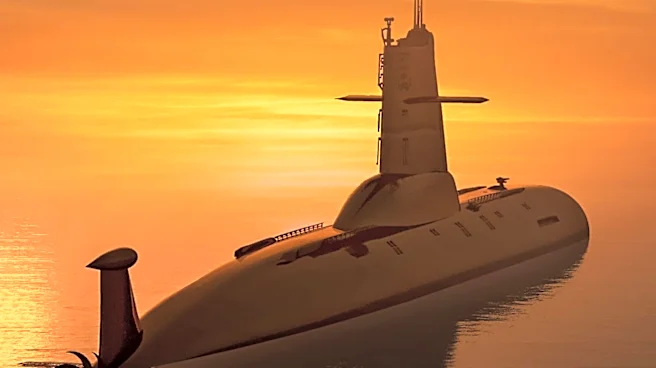
Advancements in artificial intelligence (AI) are transforming anti-submarine warfare (ASW) capabilities, potentially impacting the detectability of ballistic missile submarines (SSBNs). AI-driven systems are enhancing the ability to detect and track submarines,
raising concerns about the survivability of SSBNs, which are considered the most secure nuclear deterrent. The integration of machine learning, autonomy, and sensor fusion in ASW platforms is being explored to improve detection capabilities across different ocean depths.
Why It's Important?
The development of AI-enhanced ASW technologies could alter the strategic balance by affecting the perceived invulnerability of SSBNs. This has significant implications for nuclear deterrence and strategic stability, as SSBNs play a critical role in ensuring a credible second-strike capability. The potential for increased detectability of SSBNs may prompt changes in nuclear strategies and force postures, influencing global security dynamics.
What's Next?
As AI technologies continue to evolve, nations will need to assess their impact on strategic stability and consider potential arms control measures. The integration of AI in ASW could lead to shifts in military investments and strategies, with countries seeking to enhance their detection capabilities while also developing countermeasures to protect their SSBNs. Ongoing research and dialogue will be essential to address the challenges and opportunities presented by AI in the context of nuclear deterrence.