



What's Happening?
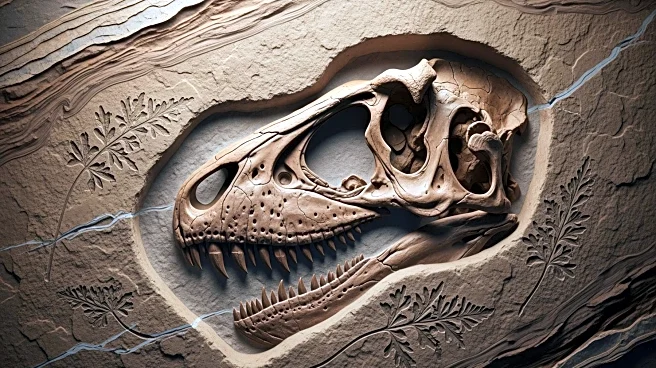
In 2025, paleontologists have identified several new dinosaur species, providing fresh insights into the prehistoric era. Among the discoveries is the Khankhuuluu mongoliensis, a dinosaur that may represent a missing link in the Tyrannosaurus family tree.
This species, dubbed the 'Dragon Prince of Mongolia,' was found to be closely related to the ancestors of tyrannosaurs. Another significant find is the Spicomellus afer, a dinosaur with long spiky bones, discovered in August 2025. Additionally, the Joaquinraptor casali, a megaraptor from Patagonia, was found with remnants of its last meal, offering clues about its diet. In Montana, the Brontotholus harmoni, a dome-headed dinosaur, was unearthed, marking the first pachycephalosaurid from the Two Medicine Formation.
Why It's Important?
These discoveries are crucial for understanding the evolutionary history of dinosaurs and their ecological roles. The identification of Khankhuuluu mongoliensis helps fill gaps in the tyrannosaur lineage, offering insights into the development of these apex predators. The Spicomellus afer's unique skeletal structure provides new information on dinosaur defense mechanisms and adaptation strategies. The Joaquinraptor casali's preserved remains offer a rare glimpse into the dietary habits of megaraptors, enhancing our knowledge of their ecological interactions. These findings contribute to the broader field of paleontology by expanding our understanding of dinosaur diversity and evolution, which can inform studies on biodiversity and extinction patterns.