




What's Happening?
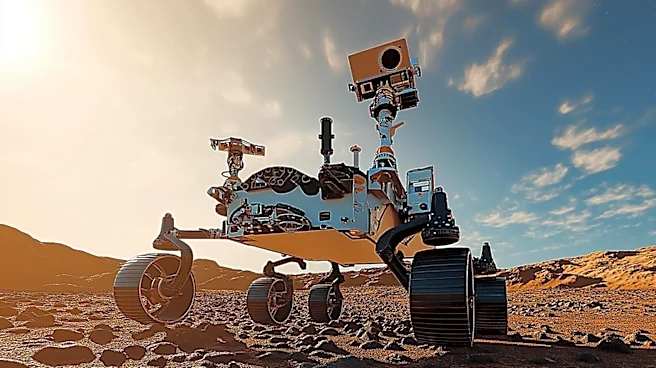
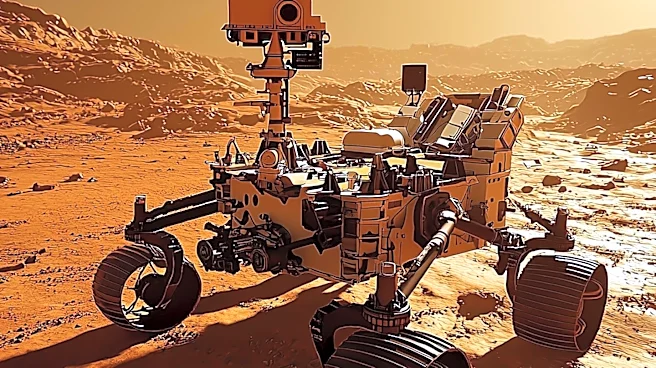
NASA's MOXIE instrument, aboard the Perseverance rover, successfully converted Martian air into 122 grams of breathable oxygen between 2021 and 2023. This achievement demonstrates the potential for astronauts to produce oxygen on Mars, essential for both
breathing and rocket fuel. MOXIE, a technology demonstration, used a solid oxide electrolyzer to separate oxygen from carbon dioxide in the Martian atmosphere. The experiment proved the feasibility of in-situ resource utilization, a critical step for future manned missions to Mars.
Why It's Important?
MOXIE's success marks a significant milestone in space exploration, showcasing the ability to utilize local resources on Mars. This capability is crucial for reducing the cost and complexity of future missions, as it allows for the production of essential materials on-site rather than transporting them from Earth. The ability to generate oxygen on Mars could enable longer and more sustainable human presence on the planet, supporting both life support systems and the production of rocket propellant for return missions.
What's Next?
NASA plans to develop a full-scale system that can produce oxygen continuously at a much larger scale. This system would need to operate autonomously, producing kilograms of oxygen per hour, and include machinery to liquefy and store the oxygen. Such advancements are necessary to support human missions to Mars, providing the resources needed for both life support and return journeys. The development of this technology will be a focus for future Mars exploration missions.